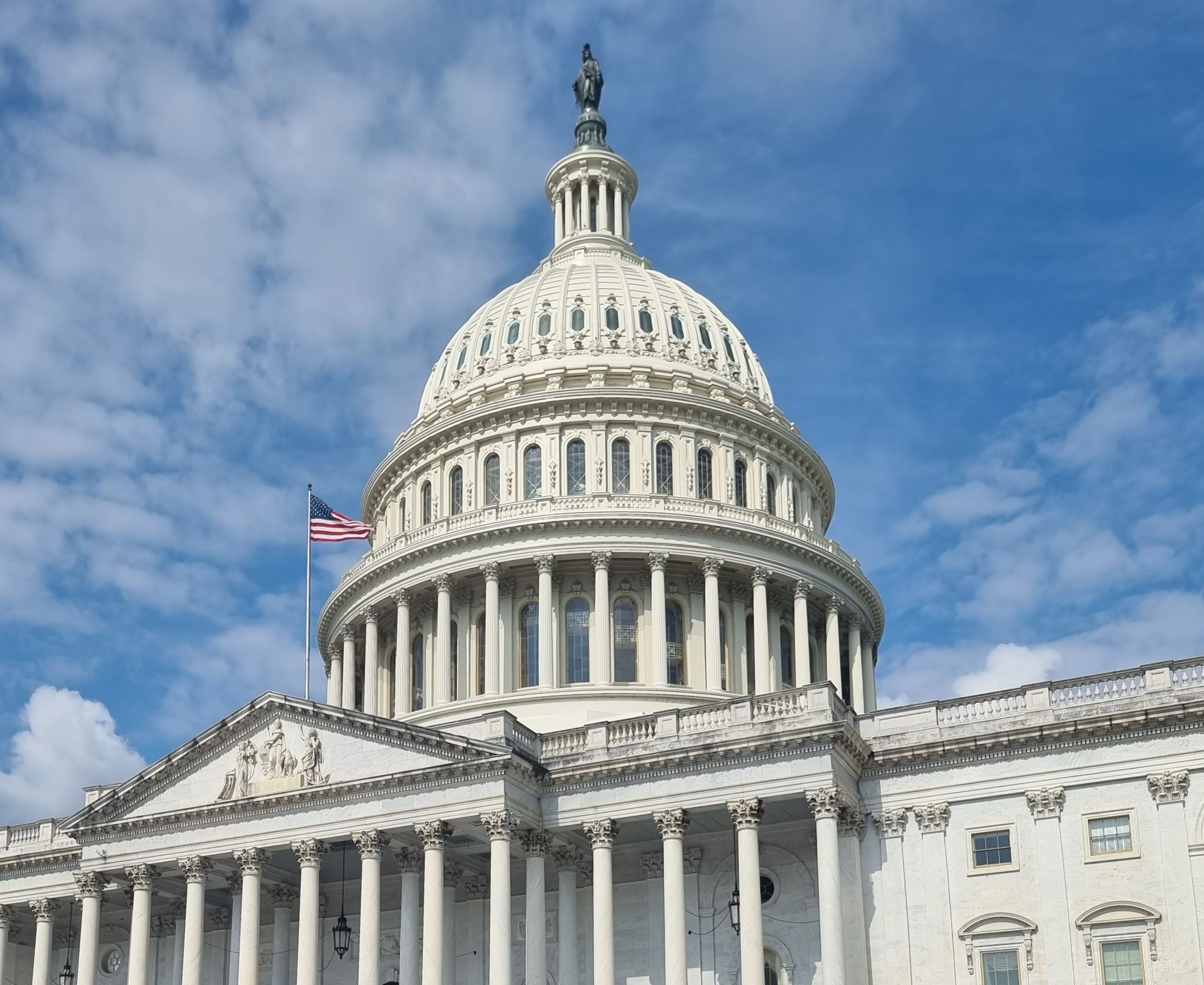
America’s crypto market can receive a friendlier regulatory interpretation without receiving a durable market structure. That distinction explains why Representative French Hill, the Arkansas Republican who chairs the House Financial Services Committee, is still pressing for the CLARITY Act despite an active SEC and CFTC. According to reporting on his television remarks, Hill argued that the agencies’ efforts under existing authority cannot replace a permanent legislative foundation. His argument concerns both the reach of regulation and its staying power. Bitcoin.com’s report on Hill’s legislative push
Hill discussed crypto regulation during an October 7 Fox Business appearance. Fox Business interview For market participants, the practical question is whether initiatives led by SEC Chair Paul Atkins and CFTC Chair Michael Selig can support business decisions extending beyond the current administration. A token issuer can adapt to a new offering exemption. An exchange contemplating years of investment in custody, surveillance, and US distribution needs confidence that the legal basis for its business will survive a change in leadership or a court challenge.
The immediate obstacle is parliamentary. On September 15, 2026, senators rejected cloture on the motion to proceed to H.R. 3633, the Digital Asset Market Clarity Act, by 49–50. This was a failed attempt to advance consideration, rather than a final passage vote. The 49 affirmative votes were eleven short of the usual 60-vote threshold for legislative cloture in a full Senate. A one-vote margin between the two sides therefore understates the coalition-building problem. Senate cloture record
The calendar creates a second obstacle. The Senate’s tentative schedule leaves 22 potential weekday session days after the November midterms: November 9–10, November 16–20, and November 30–December 18. That count follows the published non-legislative periods. It is a planning measure, not a guarantee of 22 full days devoted to crypto, nor the Senate’s technical count of legislative days. Leaders can revise the schedule. The lame-duck period is the final scheduled opportunity for this Congress to finish the bill before the 119th Congress ends on January 3, 2027. Senate’s tentative 2026 schedule
Those days must accommodate competing legislation, nominations, procedural delays, and any further negotiations between the chambers. Even renewed Senate momentum would not itself enact a law: both chambers must agree to identical text before presidential action. The market implication is that headline optimism about a renewed vote should be separated from evidence of an executable agreement. A negotiated text, a credible cloture coalition, and reserved floor time would each reduce uncertainty more than another general statement of support.
Meanwhile, the SEC’s Regulation Crypto Assets proposal addresses a narrower problem. Announced on August 18, it would create a tailored offering regime for certain investment contracts involving crypto assets, including registration exemptions and a conditional safe harbor concerning investment-contract status. Its public comment period closes October 20, 2026. As of this article’s date, the proposal is not an operative exemption that issuers can simply start using. Its foundation remains the federal securities laws and the authority those laws delegate to the SEC. SEC announcement, Federal Register proposed rule and deadline
The CFTC is at an earlier procedural stage. Its October 5 advance notice of proposed rulemaking, or ANPRM, seeks input on Regulation Crypto Asset Transactions, known as Regulation CTX, and Regulation Crypto Asset Markets, known as Regulation CAM. The contemplated framework focuses on retail commodity transactions under Commodity Exchange Act Section 2(c)(2)(D), including a purpose-built subcategory of designated contract market registration. An ANPRM gathers information for possible future action; it does not establish a final licensing regime. The agency says comments are due 60 days after Federal Register publication. CFTC Release 9307-26
That statutory hook is consequential. Section 2(c)(2)(D) reaches certain retail commodity transactions offered on leverage or margin, or financed by specified participants, subject to exceptions including actual delivery within 28 days. Such transactions can be subject to enumerated futures-law requirements even when a platform markets the product as spot trading. The financing arrangement, customer eligibility, and delivery mechanics matter more than the label on the trading screen. CFTC explanation of retail commodity transaction authority
Consider two hypothetical customers buying the same token. One pays in full and takes delivery; the other uses exchange financing and retains a contractual claim on a platform. Their economic exposure may look similar, but their regulatory treatment can differ. A framework built around the second transaction does not automatically become a comprehensive federal charter for every venue serving the first. The CFTC already has anti-fraud and anti-manipulation enforcement authority in commodity spot markets, but that is distinct from general, continuing supervision of spot exchanges. Expanding the latter requires a statutory foundation. CFTC testimony explaining the jurisdictional boundary
Plain spot businesses consequently still confront the state-by-state money transmitter license, or MTL, patchwork alongside applicable federal obligations. The familiar “50-state patchwork” description should not be read as a claim that every state requires an identical license for every crypto activity. Coverage depends on activities, exemptions, and jurisdiction; state supervisors have also pursued harmonization. Neither initiative creates a universal federal crypto exchange authorization. CSBS discussion of state crypto supervision, Money Transmission Modernization Act
Our market-structure assessment is that this fragmentation raises the cost of connecting liquidity. An exchange must determine where it can onboard customers, which assets and transaction types it can offer, and which entity holds customer property. A market maker may then need separate inventories across venues whose customer bases and settlement arrangements differ. That can discourage arbitrage and reduce usable depth, although these legal developments alone do not establish a measurable effect on spreads. Clear legislation could make investment planning more predictable; it would not guarantee cheaper execution or eliminate commercial risk.
The agencies’ staffing situation adds another source of uncertainty. Hester Peirce’s resignation took effect October 2, leaving Atkins and Mark Uyeda as the SEC’s two commissioners. The CFTC lists Selig as its sole commissioner and chair. Across two five-member bodies, that leaves seven vacant seats. Peirce’s resignation letter, SEC September remarks identifying the then-serving commissioners, CFTC commissioner roster
Vacancies, however, do not automatically make a commission legally unable to act. The SEC’s quorum rule provides for fewer than three members when fewer are in office. An amendment effective October 2 also accommodates a single participating commissioner where disqualifications leave only one eligible member for a particular matter. Calling every two-member SEC action “under-quorum” would therefore misstate the issue. A challenge must examine the applicable quorum provisions and the actual decision process. A skeleton commission and an unlawfully constituted decision are different propositions. SEC final rule on commission quorum requirements
The broader vulnerability concerns authority and administrative process. Under the Supreme Court’s 2024 decision in Loper Bright Enterprises v. Raimondo, courts independently interpret statutes rather than applying Chevron deference simply because statutory language is ambiguous. That makes an agency’s explanation of its delegated authority central to defending a rule. It does not abolish rulemaking or presume that crypto regulations are invalid. Congress can delegate discretion, and courts must respect lawful delegations. Supreme Court’s Loper Bright opinion
For compliance planning, the resulting questions are concrete: Did the commission validly act? Does the statute authorize the substance? Did the agency satisfy the Administrative Procedure Act’s applicable requirements and adequately explain its choices? Vacancies may intensify political scrutiny, but they are no substitute for answering those legal questions. Equally, legislation is durable rather than immutable: Congress can amend it, courts can interpret it, and agencies still have to implement it. CLARITY’s potential advantage is an express allocation of responsibilities that administrative coordination alone cannot supply.
Tax compliance shows why even a successful deregulatory initiative resolves only part of the operating environment. On October 6, FinCEN withdrew its 2020 proposal concerning reporting and recordkeeping for certain transactions involving unhosted or otherwise covered wallets. Withdrawing a proposal removes a potential additional burden. It does not repeal every existing anti-money-laundering obligation or alter the Internal Revenue Code. FinCEN withdrawal notice
The IRS’s 2026 Form 1099-DA instructions continue to require gross-proceeds reporting for covered broker transactions and basis reporting for digital assets that meet the tax rules’ definition of covered securities, subject to the instructions’ exceptions and reporting methods. Mandatory basis reporting is not universal: pre-2026 holdings and assets transferred into a broker are generally noncovered. The tax-reporting term “covered security” also should not be mistaken for an SEC classification ruling. IRS Form 1099-DA instructions
A trader can therefore face a simpler wallet-transfer policy while still needing complete acquisition and disposal records. A compliance team can see one proposed surveillance obligation disappear while its information-reporting system remains essential. This is the operational limbo created by fragmented agency action: uncertainty about future market access coexists with present obligations that are sufficiently clear to require action now. Firms should keep separate decision records for securities status, derivatives treatment, state licensing, anti-money-laundering controls, and tax reporting. Relief in one category should be mapped to that category’s controls before anyone changes the others.
For US traders, the immediate task is to assess the specific legal entity and product being offered. Verify eligibility, withdrawal arrangements, custody terms, and transaction-record exports before treating a regulatory announcement as a reason to move funds. A globally visible order book is not evidence that a platform may serve a US resident. Offshore liquidity should be evaluated only where access is lawful and permitted; neither a proposed CAM framework nor Hill’s legislative push removes geographic restrictions. Keep acquisition records when transferring assets, because the destination broker may not report their basis.
For institutions, scenario analysis is more useful than a single forecast of passage. Test three operating cases: legislation with an implementation period, continued agency rulemaking without legislation, and litigation that delays a relied-upon rule. In each case, identify which trading permissions, counterparties, and custody arrangements would remain usable. Compare onshore and eligible offshore execution using realizable depth after collateral, settlement, withdrawal, and counterparty constraints. A tighter displayed spread can be outweighed by capital that cannot be moved when needed.
For exchanges, the near-term opportunities are to submit precise comments before the SEC deadline, track the CFTC docket, and document the statutory basis for each product. Maintain existing licenses and reporting controls while evaluating future registration pathways. The next meaningful signals are published legislative compromises, scheduled Senate action, final agency text, effective dates, and court orders. Hill’s 22-day clock matters because Congress can supply authority that agencies cannot create for themselves. Until that happens, build market access around permissions that exist today and keep systems adaptable enough to absorb the rules that follow.
🚀 Ready to Start?
The world's largest crypto exchange 👋 Sign up on Binance with code HERMESS and get fee discounts!
⚠️ This content is for informational purposes only, not financial advice. Crypto investing involves risk. Always do your own research (DYOR).
🔥 Also on Bybit
Bybit is a top-3 global exchange. Sign up with code 7LMZ0G for trading fee discounts!
Sign Up on Bybit →⚠️ Crypto investing involves risk. Always do your own research (DYOR).