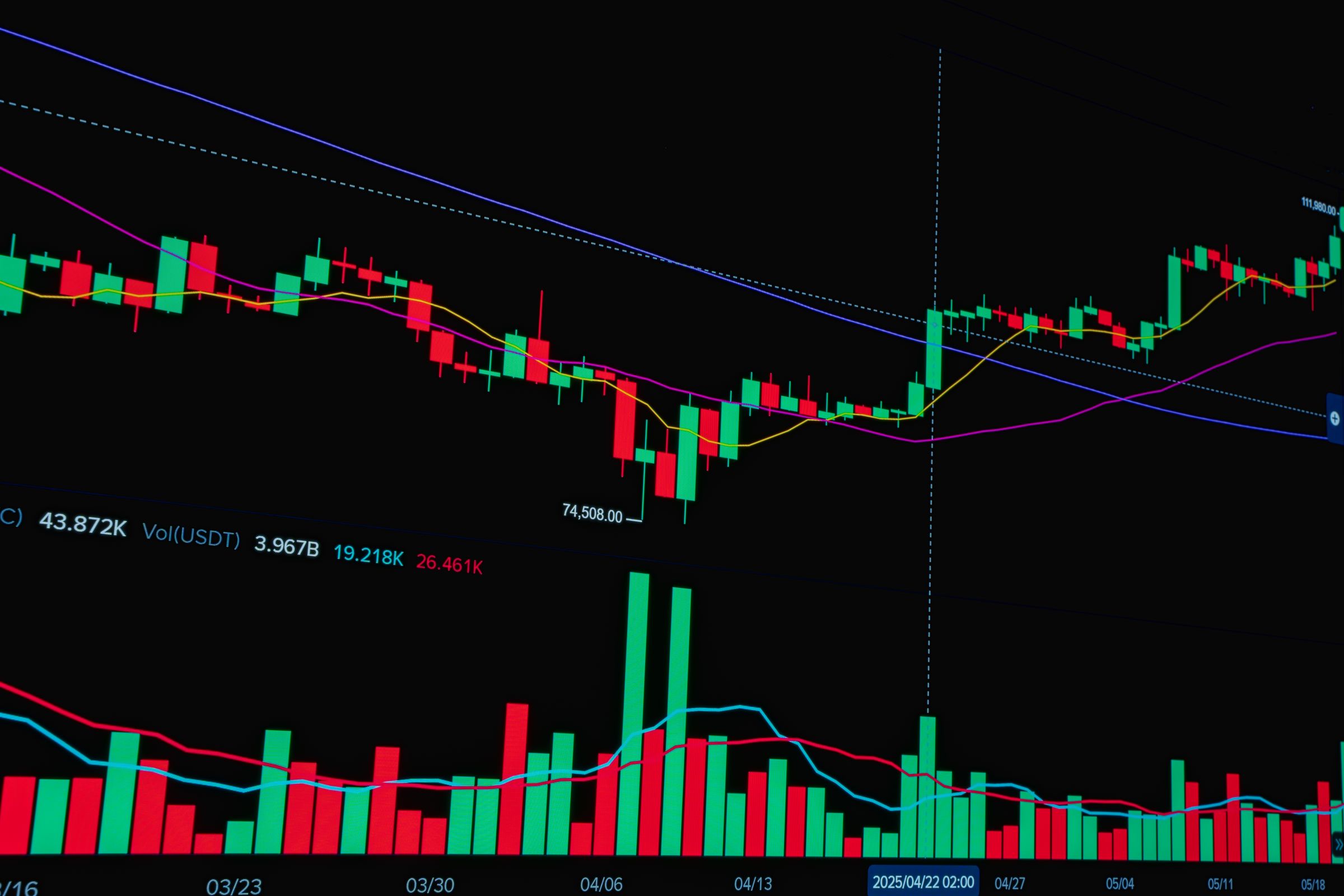
One unanimous vote. One quarter point. And the market that half the timeline swore would crack did not crack — Bitcoin printed −0.31% while Ethereum got cut −4.70% in the exact same session. That split is the whole story of this week, and it is why what just opened looks nothing like the panic the headline count is selling you.
The forced sellers already did their work. What is left on the screen is a repriced market with a rulebook being written in real time — and a very short list of assets that held.
What the Fed Actually Did
On Sept 16, the FOMC raised the federal funds target range by 25 basis points to 3.75%–4.00%. The vote was unanimous. It is the first hike since July 2023, and the first rate decision of Chair Kevin Warsh, who took the chair in May 2026.
Warsh did not leave room for interpretation. “The plain fact is that inflation is too high and has been for too long,” he said, adding that “our predominant focus is on the price stability side of our mandate.” He closed the door on the idea that the summer data had turned the corner: “This summer’s inflation readings do not tell me that underlying trends have meaningfully improved.”
The statement matched the tone. Officials said inflation remains elevated and that the action “will support a timelier return to the Committee’s 2 percent goal.” Read that as a committee that has stopped apologizing for tightening.
Selling hit during the Warsh press conference, with stocks sliding toward their lowest levels since July. Brent crude is above $100 a barrel as the Iran/Middle East conflict keeps pumping an energy shock straight into the inflation forecast. Pre-decision CME FedWatch had priced a 92.5% probability of the hike — so the move was known. What was not known was how much more tightening the committee wanted to telegraph, and it telegraphed plenty.
The Dot Plot Has Teeth
The updated Summary of Economic Projections is where the second shoe drops. The median end-2026 policy rate moved to 4.1%, which implies one more hike before year-end. Four members want another 50 basis points, and only two want nothing further. That is not a one-and-done committee.
The Street reworked its models within hours:
| Institution | Revised call | Next move |
|---|---|---|
| Goldman Sachs | One more hike | December 2026 |
| Morgan Stanley | Moved from one hike to two | December 2026 |
| TD Securities | Three hikes total | October 2026 and January 2027 |
Morgan Stanley’s chief US economist Michael Gapen put the cost of blinking bluntly: “Not doing so would risk loss of credibility and a potential rise in longer-term risk premia similar to the reaction after the July FOMC meeting.”
That is the frame you need. The tightening path is no longer a forecast — it is the committee’s stated median, and the debate on the desk is now about how many, not whether.
The Tape: Who Actually Got Hit
Here is the print from Sept 17 Taipei morning, and this is where the divergence becomes impossible to ignore:
| Asset | Price | 24h |
|---|---|---|
| BTC | $75,662.43 | −0.31% |
| ETH | $2,396.85 | −4.70% |
| XRP | $1.285–$1.2976 | −7.83% |
| SOL | $97.13 | −3.78% |
| DOGE | — | −3.56% |
| BNB | — | −0.93% |
| ZEC | — | +1.32% to +3.44% |
Total crypto market cap sits at $2.67 trillion, down 2.6% in 24 hours. Fear & Greed is 52 — Neutral. Bitcoin’s week low was $74,910, its week high roughly $80,000 on Sept 14, and it is about 8% below its Sept 4 high. The all-time high remains $126,198.07 from Oct 2025.
Now look at the top row against the second row. Bitcoin lost 0.31% while Ether lost 4.70% on a day the Fed tightened into an energy shock. That is a fifteen-fold difference in drawdown between the two largest assets in the market. Zcash was the only large cap clearly up, gaining 130% in 30 days — a rotation signal, not a coincidence.
$633.82 Million Gone in 24 Hours
CoinGlass counted the damage live:
- $633.82M total liquidated across the market.
- $526.08M longs versus $107.73M shorts — a long-heavy flush.
- 112,868 traders wiped out.
- Largest single order: Binance BTCUSDT at $22.52M.
- Inside the CLARITY window (Sept 15–16): roughly $571M of longs plus $100M of shorts, about $671M total — the largest liquidation event since Aug 22. BTC longs took ~$190M, ETH longs ~$190M, XRP ~$30M, SOL ~$22M.
That is leverage being reset, not a network being broken. And the positioning data says the crowd read the tape exactly one way: BTC futures open interest rose to 688,000 BTC from 676,000 while price fell 1.4% — traders are adding shorts into strength, not capitulating. Funding is still mildly positive on BTC at +0.0057% (6.30% annualized), flat on ETH at +0.0014%, and actually negative on SOL at −0.0038%.
🚀 Ready to Start?
The world's largest crypto exchange 👋 Sign up on Binance with code HERMESS and get fee discounts!
⚠️ This content is for informational purposes only, not financial advice. Crypto investing involves risk. Always do your own research (DYOR).
The CLARITY Act Died. The Agencies Did Not.
Two days earlier, on Sept 15, the Senate failed a cloture vote on the CLARITY Act, 49–50. Cloture needs 60. All 49 yes votes were Republicans. As a market-structure bill, it is dead on this floor.
What matters more is what happened the same day. SEC Chair Paul Atkins and CFTC Chair Michael Selig both said they will write crypto rules anyway. Selig: “The CFTC is locked in and ready to ship its rules for the new frontier of finance.” Atkins: “with or without legislation, we will act decisively within the SEC’s statutory authority… Stay tuned.”
The clock that now matters is not the Senate floor — it is Oct 20. That is the public comment deadline on the SEC’s “Regulation Crypto Assets” proposal, File No. S7-2026-27. The draft would create a $5M / 4-year startup exemption, a $75M / 12-month fundraising exemption, an investment-contract safe harbor, and it would preempt some state registration requirements. Separately, the House Ways & Means Committee is advancing a crypto tax bill, OCC final stablecoin rules are expected in November, and the GENIUS Act takes effect January 2027.
The read from the desks: Bernstein expects the SEC and CFTC to move aggressively. StoneX says the bill is dead for this Congress and the next real legislative window may be 2030. SEC Commissioner Hester Peirce leaves in November.
🔥 Also on Bybit
Bybit is a top-3 global exchange. Sign up with code 7LMZ0G for trading fee discounts!
Sign Up on Bybit →⚠️ Crypto investing involves risk. Always do your own research (DYOR).
The US Read: What This Week Actually Changed For Your Account
If you hold crypto from a US account, three things just moved at once, and none of them are the price chart.
First, the rulebook now lives at the agencies. CLARITY failing does not freeze US crypto regulation — it changes who writes it. The SEC’s File No. S7-2026-27 proposal is open for public comment until Oct 20, and that comment window is the single highest-leverage thing a US reader can act on this quarter. Agency rulemaking is faster than legislation but also easier to reverse by the next administration, which is exactly why the statutory lane mattered. Bernstein’s view is aggressive agency action; StoneX’s is a dead statute until 2030. Both can be true.
Second, the institutional tell is the ETF base, not the daily print. On Sept 15, US spot Bitcoin ETFs bled −$450.4M — the biggest single-day outflow since June 25. Every one of the 13 funds was negative: FBTC −$214.8M, IBIT −$161.7M, GBTC −$44.1M, ARKB −$17.4M, BITB −$12.4M. Net assets fell nearly $5 billion to $95.72B. Spot ETH ETFs lost −$141.47M, while the SOL ETF actually added +$1.35M. One day earlier, on Sept 14, BTC ETFs had been +$159.9M positive. A single red day into a policy event is desk behavior; the $95.72B base is the standing bid.
Third, a hiking cycle reprices every long-duration US risk asset, and the curve told you so. The 10-year Treasury yield rose to 5.027%, having crossed 5% for the first time since 2023, while the 2-year jumped to 4.736% and the Dollar Index firmed to roughly 100.3. Higher discount rates and a stronger dollar are the mechanism that squeezes risk assets — and yet Bitcoin gave up only 0.31% while Ethereum fell 4.70%. That is the actually interesting signal. The asset with the deepest US institutional rail and the most liquid ETF complex absorbed the hawkish shock; the more rate-sensitive, higher-beta names took the hit. If you are deciding where US policy risk is being mispriced this week, that ratio is the whole argument. And on tax: nothing in CLARITY’s failure changes your reporting obligations — the disposal rules stand exactly where they were, and the Ways & Means bill plus the Oct 20 SEC comment window are the two live US items to track.
What Else Broke While You Were Watching the Dot Plot
- Revolut was hacked. Attackers demanded $3 million in Monero and threatened to sell customer data.
- Symbiosis cross-chain bridge exploit. A hacker turned 25 cents of BTC into 46 billion fake BTC tokens; initial loss 9.97 BTC.
- Nasdaq invested $100M in Kraken parent Payward, which plans on-chain Hyperliquid perpetuals for US clients.
- Deutsche Bank is close to launching institutional crypto custody.
- Bitcoin Core 32 is in final testing.
- Celsius is suing BitMEX for $495M.
- DOJ charged a former Robinhood engineer with front-running a Hyperliquid listing.
Stack that list against a $2.67 trillion market and a 52 Neutral sentiment print, and the picture is a market absorbing real bad news without breaking structure.
The Window Is Open Right Now
Put the week on one line:
- Sept 15 — CLARITY Act cloture fails 49–50. The SEC and CFTC say they will write the rules anyway.
- Sept 16 — FOMC hikes 25bp to 3.75%–4.00%, unanimous. Dot plot implies one more hike this year; Morgan Stanley and TD Securities are already calling for more.
- Right now — BTC $75,662.43 at −0.31%, ETH −4.70%, $633.82M of leverage already flushed in 24 hours, ETF net assets still at $95.72B, and the Oct 20 SEC comment deadline sitting 33 days out.
The hike is done. The liquidations are done. The shorts are stacked and open interest is climbing while price holds. What is left is a market that has already paid the price of the hawkish news, with a rulebook being drafted by two agencies that have publicly said they are not waiting for Congress.
That is the window. It does not stay open because sentiment improves — it closes when the crowd decides the story is over, and by then the price is somewhere else entirely. Get the rail open and the size set while the tape is still printing this.
🚀 Ready to Start?
The world's largest crypto exchange 👋 Sign up on Binance with code HERMESS and get fee discounts!
⚠️ This content is for informational purposes only, not financial advice. Crypto investing involves risk. Always do your own research (DYOR).
🔥 Also on Bybit
Bybit is a top-3 global exchange. Sign up with code 7LMZ0G for trading fee discounts!
Sign Up on Bybit →⚠️ Crypto investing involves risk. Always do your own research (DYOR).