On Nov. 5, 2026, the CLARITY Act has 59 days until the new Congress convenes on Jan. 3, 2027. Democrats’ projected capture of both chambers makes that deadline consequential: unfinished legislation must restart, while federal agencies can keep shaping crypto markets under existing law.
The election changed the negotiating table
AP’s postelection reporting describes a Democratic sweep of Congress following the Nov. 3 elections. These are media calls, not final certification of every race. Republicans retain control through the outgoing Congress; Democrats take over when the new Congress convenes.
That distinction separates election-night expectations from legal change. The result does not itself rewrite exchange obligations, token classifications, or stablecoin requirements. As crypto.news reports, the legislative handover and agency initiatives are proceeding on different tracks. The immediate question is whether lawmakers can finish a market-structure bargain before their negotiating leverage changes.
CLARITY still needs votes, not just a revote
The House Clerk’s roll call records passage on July 17, 2025, by 294–134, including 78 Democratic supporters. Senate committee progress never became a floor coalition: Agriculture advanced its version on Jan. 29, 2026, without Democratic support, and Banking approved its version on May 14 by 15–9, according to TheStreet’s account, republished by Yahoo Finance.
The Sept. 15 Senate record shows a failed procedural vote, 49–50. This was an effort to advance consideration, not final passage. All 49 supporters were Republicans; opposition included 44 Democrats, two independents, and Republicans Susan Collins, Josh Hawley, Jerry Moran, and Thom Tillis. Supporters remained 11 votes short of 60.
Tillis’s pending motion to reconsider preserves a route to another vote, as BitcoinInsider explains. It does not supply the missing coalition. Collins raised deposit-flight concerns, while Democratic negotiators demanded stronger ethics and market protections.
Our assessment: reintroduction in 2027 is the more plausible path unless negotiators materially change the bargain. Democrats expecting committee control have less incentive to accept the current text before January. That is a political inference, not evidence that negotiations have ended.
New gavels cannot automatically erase agency rules
Elizabeth Warren is expected to lead Senate Banking, and Maxine Waters is in line for House Financial Services; those appointments are not yet settled. Reporting on the prospective leadership points to stronger investigative and subpoena powers. Hearings can scrutinize presidential crypto interests, agency decisions, and industry conduct even when legislation stalls.
Most contested legislation still faces the Senate’s 60-vote hurdle. Nor does a Democratic majority create an easy Congressional Review Act reversal. Under the CRA’s enactment requirements, a disapproval resolution needs presidential approval or a successful veto override, requiring two-thirds in each chamber. With Trump remaining president, reversal of his agencies’ agenda through that route is an unlikely baseline scenario. Agency proceedings and a legislative restart therefore deserve closer attention than assumptions that committee control automatically changes the law.
SEC: conditional access and a token-specific decision
Project Crypto is already producing concrete changes. In his Sept. 17 Innovation Exemption statement, SEC Chair Paul Atkins described temporary, conditional relief for Tokenized Securities Venues, or TSVs, and covered liquidity providers. Permissioned TSVs can facilitate trading in qualifying tokenized NMS stocks. Access standards, shareholder rights, issuer objections, and continuing antifraud protections remain central to that arrangement.
A separate Nov. 3 Corporation Finance no-action response concerning Canton Coin illustrates how classification can develop through individual cases. Staff treated the coin as a digital commodity based on representations about programmatic network operation and the absence of a central party. The response addresses enforcement under the described facts; it is not a blanket legal ruling for other tokens. Both actions influence business models without waiting for CLARITY’s passage.
CFTC and OCC are moving at different speeds
The CFTC’s Oct. 5 announcement, Release 9307-26, opened an advance notice of proposed rulemaking on Regulation Crypto Asset Transactions and Regulation Crypto Asset Markets. Chair Michael Selig’s initiative relies on existing authority over relevant retail commodity transactions. It asks about a crypto-specific designated contract market registration category. Comments are due within 60 days of Federal Register publication. This is consultation toward potential rules, not an operating license already available to every spot exchange.
The OCC is further along. Its Oct. 21 final-rule announcement confirms that the GENIUS Act and implementing rule take effect Jan. 18, 2027. There is no blanket grace period. OCC application guidance explains the waiver route for eligible applicants.
The published final rule permits qualifying applicants with substantially complete applications pending on or before Jan. 18 to request waivers lasting up to 12 months. A request does not guarantee relief. The rule also provides deemed approval after 120 days without denial, with that clock beginning no earlier than the Act’s effective date and substantial completeness. Implementation can advance without a new congressional vote because Congress already supplied the underlying authority.
December’s crowded calendar meets a volatile market
WilmerHale’s lame-duck analysis identifies the competing deadlines: the current continuing resolution and surface transportation authorization expire Dec. 11; EXIM authorization expires Dec. 31. The NDAA also demands attention. Available floor time may prove as restrictive as the vote count.
Market moves offer a short-term positioning snapshot. Bitcoin touched approximately $75,618 during the Nov. 3–4 selloff, according to election-market reporting, before recovering above $80,000. CoinGlass figures reported by crypto.news showed about $466.33 million liquidated within an hour, approximately 81% in shorts.
Meanwhile, spot Bitcoin ETFs lost about $115.56 million on Nov. 3, their third consecutive session of net outflows. Reuters reporting republished by MarketScreener put the broader market’s monthly value loss near $300 billion. A short squeeze can coexist with fund withdrawals; neither proves what Congress will do.
A practical calendar for U.S. holders
Separate the deadlines. Dec. 11 arrives first and governs funding and transportation authority. Jan. 3 ends the current Congress. A funding extension does not automatically rescue unfinished CLARITY legislation. Track actual floor scheduling, revised text, and coalition commitments separately from shutdown headlines.
Keep macro events alongside policy events. The BLS calendar schedules October’s employment report for Friday, Nov. 6, at 8:30 a.m. Eastern. The Federal Reserve calendar also includes the December FOMC meeting. Watch how labor data change expectations for the interest-rate path; an election narrative cannot explain every move in dollar liquidity or risk appetite.
Check the issuer behind your stablecoin. Beginning Jan. 18, issuing payment stablecoins in the United States without the required permission or applicable relief is unlawful. For USDT or USDC exposure, identify the issuing entity, its jurisdiction, authorization status, redemption route, and any approved waiver. Domestic issuance and foreign-issuer access are distinct legal questions. A familiar ticker does not establish compliance, and an issuer’s pending application is not itself an approved waiver. This deadline concerns issuance obligations, not a blanket prohibition on holding tokens.
Reconcile tax records before year-end. Export transaction histories, fees, acquisition costs, and wallet-transfer records. Compare them with the IRS instructions for Form 1099-DA: basis reporting depends on whether assets are covered, so a form may not contain your complete cost history. The wash-sale statute targets stock or securities; ordinary directly held bitcoin is generally outside that rule. Tokenized securities are different. Confirm the instrument and tax treatment before harvesting losses, especially when switching between direct holdings and exchange-traded products.
Check execution quality. During sustained ETF withdrawals, compare bid-ask spreads, premiums or discounts to net asset value, and available liquidity. Review exchange withdrawal access and banking connections as well. Fund-flow direction alone does not tell you the price available for your order.
Use the calendar to manage exposure
The 59-day window measures the remaining legislative opportunity, not a countdown to a guaranteed rally or selloff. Agency actions now determine practical access and compliance while Congress debates a broader settlement. Treat 2027 as a likely legislative restart year, and the policy calendar as a risk-management tool rather than an entry or exit signal.
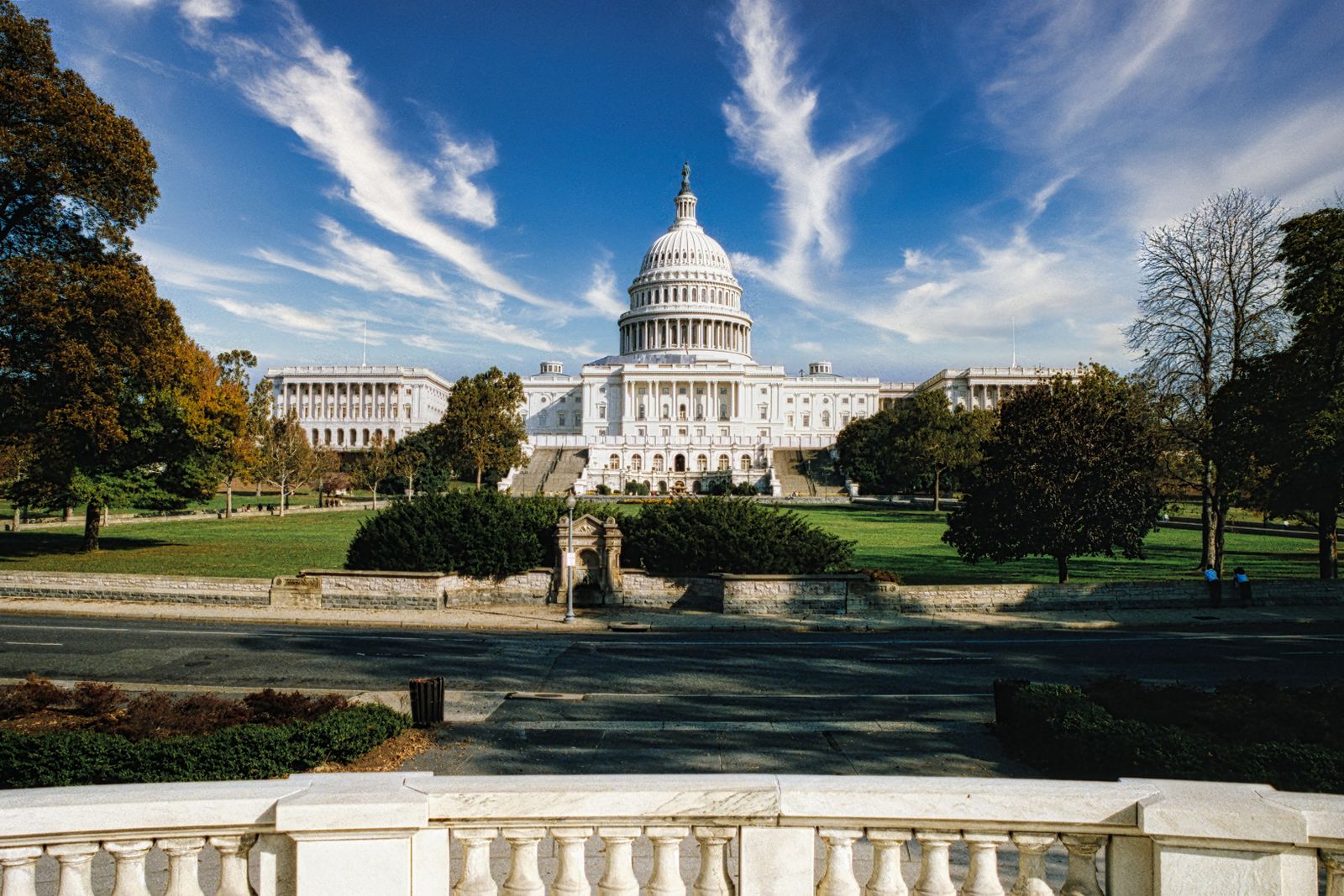
Cover photo: U.S. Capitol, via Pexels.
Up to 400 USDC | Complete tasks to unlock rewards
Sign up through the campaign link → verify your identity → meet the deposit and trading requirements shown on the campaign page, then complete any remaining eligible tasks. Eligibility, claiming steps and first-come, first-served availability are subject to the official campaign rules. Signing up alone does not guarantee 400 USDC.
⚠️ This content is for informational purposes only, not financial advice. Crypto investing involves risk. Always do your own research (DYOR). Rewards and campaign terms are subject to Binance’s official announcements.
🔥 Also on Bybit
Bybit is a top-3 global exchange. Sign up with code 7LMZ0G for trading fee discounts!
Sign Up on Bybit →⚠️ Crypto investing involves risk. Always do your own research (DYOR).