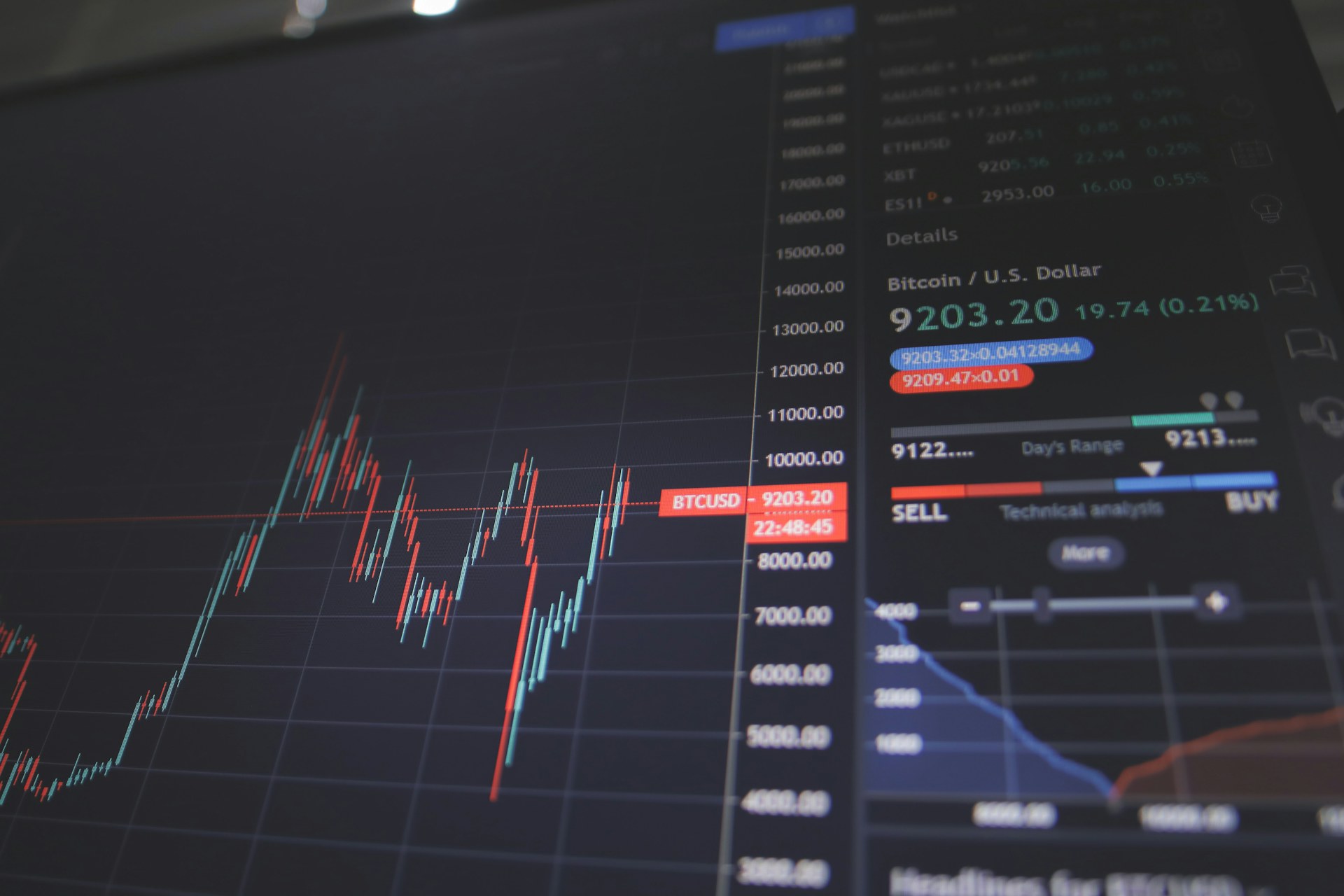
Bitcoin was supposed to break. Core CPI ran hot, the 30-year Treasury yield punched to 5.309% — its highest since June 2004 — and CME FedWatch now prices an 88% chance of a Fed hike in four days. Instead, $77K held, Ether tore through $2,600, and the only people who got hurt were the shorts. That is not a market absorbing bad news. That is a market that already ate it.
At 01:02 UTC on Sept 12, Bitcoin traded at $77,276.70, up 0.40% on the day, with a 24-hour range of $76,046.58 to $79,890.00. Ether sat at $2,511.14, up 2.16%, after briefly clearing $2,600 intraday for an eight-month high. Solana added 2.57% to $101.89, and total crypto market cap held in the $2.7–2.75 trillion band. The floor held while the ceiling got tested — that is the shape of a market leaning up.
The Print That Was Supposed to Crack the Floor
August CPI landed on Sept 11 at 8:30 a.m. ET, and the headline was clean: +0.4% month over month and +3.4% year over year, right on consensus. The core number was the problem. Core CPI rose +0.3% m/m against +0.2% expected — the hottest core print in months — with the annual rate at +2.4%. Energy did the heavy lifting at +2.1% m/m, gasoline jumped +3.9%, and energy is now up +16.3% year over year.
The knee-jerk reaction was exactly what you would script. Bitcoin dumped to roughly $76,000–76,700 as the core miss hit the tape, then reversed more than 3% to about $79,837 before settling near $77,800. Equities followed the same script in reverse: the S&P 500 finished +1% and the Nasdaq +1.1%. Read that sequence again. A hotter core print, a 19-month-high long-bond yield, and risk assets in the green. The market is treating inflation risk as a known quantity, not a new shock.
88% Hike Odds and a 5.309% Long Bond
The rates market is not being subtle. CME FedWatch put a 25-basis-point hike at the Sept 16 FOMC at 85.6%–88%, up from roughly 60% a week earlier. Polymarket sits at 78–81%. A hike would move the target range from 3.50%–3.75% to 3.75%–4.00%, and it would be the first Fed increase since July 2023. December is already pricing roughly 60% odds of another move.
FedWatch is not a survey — it is arithmetic straight out of 30-day Fed Funds futures, which are quoted at 100 minus the expected fed funds rate, then converted into a probability distribution around the FOMC’s target range. When that number climbs from 60% to 88% in seven days, capital has already moved.
The bond market has moved with it. The 30-year Treasury at 5.309% is the highest yield since June 2004 — the month the Fed began its mid-2000s tightening cycle. For a US investor, that is the real hurdle: you can own a 30-year government coupon near 5.3% with no custody risk and no volatility. Every risk asset now has to out-earn that.
Here is the part that matters more than the yield itself. Bitcoin absorbed a hot core CPI, a near-certain hike, and a generational high in long-bond yields — and still closed the day above $77,000. The bad news is priced. The question is what happens when the calendar stops adding new bad news.
Who Actually Got Liquidated
Across crypto, 24-hour liquidations totaled roughly $665 million — and about $400 million of that was shorts. Not longs. Shorts.
That is the tell. The reflexive trade after a hot inflation print is to short risk, and the market punished it. Positioning was leaning the wrong way into a print that everyone expected to be bearish, and the rebound from $76.6K to $79.8K squeezed that crowd out. When the crowd that is wrong gets cleared, the path higher gets lighter.
Ether’s $2,600 Break Is the Bigger Signal
Bitcoin holding a floor is one thing. Ether clearing $2,600 intraday — an eight-month high — is a different claim entirely. ETH at $2,511 with a 2.16% gain is outperforming BTC on the day, and the brief break above $2,600 shows where the buy stops sit. When the second-largest asset leads on a hot-inflation day, the move is not a defensive bid. It is rotation.
The US ETF Channel: How the Money Actually Moves
For US investors, the institutional on-ramp is the spot Bitcoin ETF. These funds let brokerage capital buy BTC exposure inside a standard account — no exchange login, no private keys, no 24/7 chart watching — with equity-market hours, brokerage statements, and potential access through tax-advantaged retirement accounts.
The channel is showing near-term friction. Spot BTC ETFs logged three straight days of net outflows totaling $449.5 million: −$46.6M on Sept 8, −$120.2M on Sept 9, and −$282.7M on Sept 10, with ARKB the worst single fund at −$164 million. Meanwhile XRP ETFs printed three consecutive days of inflows, including +$5.1 million on Sept 10. That is rotation inside the ETF complex, not an exit from it — but it is a clear reminder that ETF flows are the swing factor for every BTC breakout attempt.
CLARITY, the SEC/CFTC Line, and What Changes for US Markets
On Sept 15 at 2:15 p.m. ET, the Senate holds a cloture vote on the motion to proceed to the Digital Asset Market Clarity Act (H.R. 3633). It needs 60 votes. Republicans hold 53 seats, so at least seven Democrats or independents have to cross over. A revised 630-page text dropped on Sept 10 with 100-plus changes, and the sticking points have not moved: the presidential crypto-conflict-of-interest ethics clause, stablecoin yield, and DeFi/AML treatment. Treasury Secretary Bessent is publicly pushing members to vote. Prediction markets are not buying it — Polymarket 13–20%, Kalshi 18–19%, Galaxy Research 10% — and parts of the press have put the bill on “death watch.”
The stakes are structural. CLARITY would replace a decade of regulation-by-enforcement with a statutory split: the CFTC would gain exclusive jurisdiction over spot markets in digital commodities — including registration categories for digital commodity exchanges, brokers, and dealers — while the SEC keeps authority over investment-contract assets and securities offerings. Tokens could migrate from SEC to CFTC oversight as a network matures and decentralizes. Section 106 directs the agencies to stand up that registration process within 180 days of enactment, with firms given 90 days after that to register.
The agencies have already sketched the bridge on their own. A joint SEC–CFTC interpretive release on March 17, 2026 classified 18 digital assets — including Bitcoin, Ether, Solana, XRP, Dogecoin, and Cardano — as digital commodities rather than securities, superseding the 2019 staff framework. That gives markets a working map, but an interpretive release is not a statute. Only Congress can lock the jurisdictional line in place. A cloture win would be a violent repricing event for the 13–20% odds; a failure leaves the framework sitting on agency guidance while the legislative calendar runs dry.
The IRS Angle Is Now Part of the Trade
US tax treatment rewards the prepared. The IRS treats digital assets as property: gains on positions held one year or less are short-term and taxed at ordinary income rates, while positions held more than one year can qualify for long-term capital-gains rates. Taxable disposals are reported on Form 8949 and Schedule D.
The reporting regime changed shape in 2026. Brokers have been required to report gross proceeds on Form 1099-DA for transactions effected on or after Jan 1, 2025, and for covered securities they must now report cost basis and acquisition date for sales on or after Jan 1, 2026. Payee copies were due to taxpayers by Feb 17, 2026.
The catch is the basis gap. Assets acquired before 2026, assets transferred in from another broker or a self-custody wallet, and most grantor-trust crypto ETFs may arrive with no basis reported — which can leave a broker reporting $0 cost basis to the IRS on your sale. In a higher-for-longer rate environment, where the spread between short-term and long-term treatment is real money, reconstruction of your own basis and holding-period records is not paperwork. It is part of the position.
What US Traders Actually Pay
US venues run on maker-taker fee tiers, and the spread between them is where quiet losses live. On Coinbase Advanced, maker fees run from 0.40% to 0.00% and taker fees from 0.60% to 0.04%, scaling with 30-day volume; the base tier (up to $10K in volume) sits at 60 bps taker / 40 bps maker, while the standard consumer buy/sell screen uses a spread plus a flat fee instead. ACH deposits are generally free, with wire deposits at $10 and wire withdrawals at $25.
On Kraken Pro, maker fees start at 0.25% and taker fees at 0.40% at the base tier, falling to 0.00% maker / 0.10% taker at $10M-plus in 30-day volume; Kraken’s instant buy interface charges a 1% trading fee plus spread, and a Kraken+ subscription zeroes out trading fees on up to $10,000 in monthly volume. Deposits are free for most fiat and crypto rails, and withdrawal fees are fixed and disclosed upfront.
The practical read: on $100,000 of monthly volume, a 0.10% versus 0.60% taker fee is a $500-per-month difference in friction — real capital that either compounds into your next position or does not. Whichever US-regulated venue fits your account, know your tier before you size the trade. The cheapest execution is the one you planned for ahead of the catalyst.
The 72-Hour Window
Three events, three days, and everything the market needs to know already has a timestamp.
Sept 15, 2:15 p.m. ET — Senate cloture. Sixty votes forces an immediate repricing of the 13–20% pass odds and pulls the SEC/CFTC framework closer to statute. Republicans need seven Democrats to make it happen.
Sept 16 — FOMC. An 85.6%–88% priced hike converts a market wager into policy for the first time since July 2023. Target range moves to 3.75%–4.00%.
Right now — the discount window. BTC is holding $77,276 after absorbing the full stack: hot core CPI, a 5.309% long bond, an 88% hike bet, three days of ETF outflows, and a fresh geopolitical energy bid from Iran’s central bank loosening FX controls to let firms settle cross-border trade in BTC and USDT. Ether is pressing an eight-month high. The liquidations that already happened took the shorts, not the buyers.
Everything that was going to hurt crypto this week has already been printed on the tape. What has not happened yet is the part where the calendar resolves. Get your funding route decided, choose the exposure that fits your US account, and be positioned before probability turns into price — because this is the last stretch where the market is still handing out the discount.
🚀 Ready to Start?
The world's largest crypto exchange 👋 Sign up on Binance with code HERMESS and get fee discounts!
⚠️ This content is for informational purposes only, not financial advice. Crypto investing involves risk. Always do your own research (DYOR).
🔥 Also on Bybit
Bybit is a top-3 global exchange. Sign up with code 7LMZ0G for trading fee discounts!
Sign Up on Bybit →⚠️ Crypto investing involves risk. Always do your own research (DYOR).