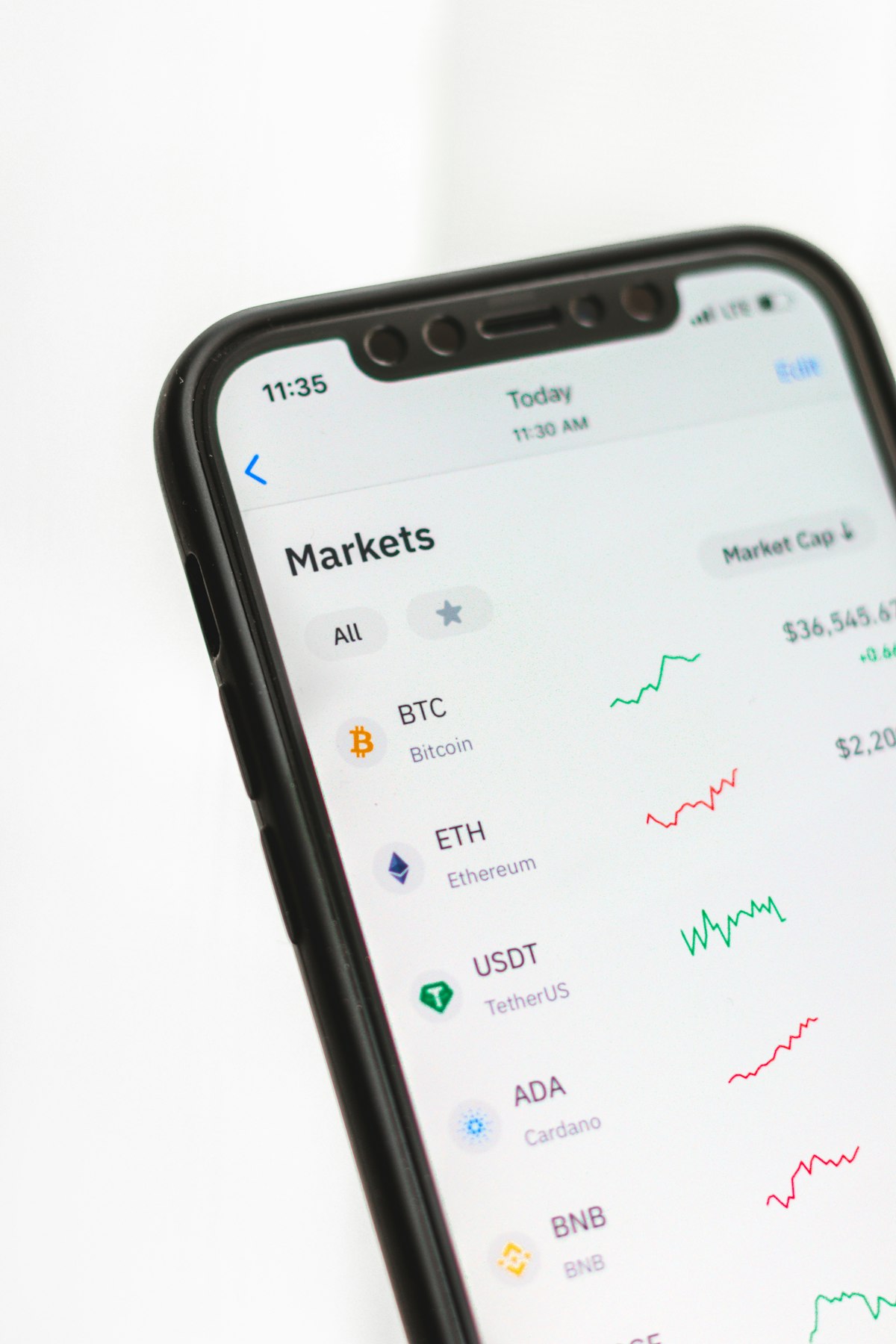
You’re staring at a Bitcoin price chart and thinking: “I should buy some.” You have a US bank account, a few thousand dollars ready to deploy, and absolutely no interest in getting scammed or surprise-frozen by a sketchy platform. The good news? Buying crypto in the United States in 2026 is smoother than it’s ever been — instant ACH funding, competitive fees, regulated custody, and multiple FDIC-adjacent protections. The catch? Not all exchanges are created equal for US residents, and the wrong choice can cost you hundreds in hidden fees, restricted coins, or IRS reporting headaches.
This guide compares the three best fiat-to-crypto on-ramps for US investors — Coinbase, Binance.US, and Kraken — and walks through everything from KYC verification to tax reporting.
What “Buying Crypto with Fiat” Actually Means
“Fiat” is just a fancy word for government-issued currency — in your case, US dollars. Buying crypto with fiat means trading your dollars for Bitcoin, Ethereum, or any other digital asset through a licensed exchange. It sounds simple, but there are layers worth understanding.
How It Works (The Short Version)
- Create an account on a regulated US exchange
- Complete KYC (Know Your Customer) identity verification — driver’s license, SSN, selfie
- Link your bank account via ACH or wire transfer
- Deposit USD — instantly via ACH (unlike the old 3–5 day waits)
- Place an order — market, limit, or recurring buy
- Store safely — keep on the exchange or withdraw to a personal wallet
Key Concepts Every US Buyer Should Know
- KYC is mandatory: All US-regulated exchanges require identity verification. No SSN, no trading.
- ACH is the cheapest way to fund: Free to $0.15 per transfer. Wire transfers cost $10–$30.
- FDIC insurance applies to USD balances, not crypto: If Coinbase holds your $10,000 in USD (not USDC), that cash may be FDIC-insured up to $250,000 through partner banks. Your actual Bitcoin is not insured if the exchange gets hacked.
- Spread vs. commission: Some platforms charge a flat fee (Kraken), others bake costs into the buy-sell spread (Coinbase Simple Trade). Always check the total cost.
| Concept | What It Means | Why It Matters |
|---|---|---|
| ACH Deposit | Bank-linked, free or near-free | Fast, cheap USD on-ramp |
| Wire Transfer | Same-day, but $10–$30 | Best for amounts over $25K |
| Market Order | Buy at current price instantly | Simple, but may include slippage |
| Limit Order | Buy only at your target price | Saves money, requires patience |
| Custodial Wallet | Exchange holds your crypto | Convenient, but you don’t own the keys |
Buying Crypto as a US Investor: SEC Regulations, IRS Tax Rules & Exchange Comparisons
The US has the most developed crypto regulatory framework in the world — and also the most paperwork. Here’s what you need to know as an American buyer in 2026.
SEC Regulatory Landscape (2025–2026)
The Securities and Exchange Commission (SEC) no longer treats every crypto asset as an unregistered security. The 2025–2026 regulatory framework has brought clarity:
- Bitcoin and Ethereum are commodities, overseen by the CFTC — not securities. This means they’re treated similarly to gold or oil from a regulatory standpoint, and spot ETFs (IBIT, FETH, GBTC) trade on NYSE and Nasdaq without legal ambiguity.
- Exchange-listed tokens (SOL, ADA, MATIC, XRP) now fall under clearer SEC guidance on digital asset classification. Most major exchanges list them only after SEC registration or no-action relief.
- Stablecoins like USDC operate under the Clarity for Payment Stablecoins Act, with Circle holding Deloitte-audited reserves at BNY Mellon and BlackRock. USDT remains in a gray area — available offshore but not on most US-regulated platforms.
In plain terms: if you stick to Coinbase, Binance.US, or Kraken, the assets you’re buying have been vetted through the US regulatory process.
Exchange Comparison: Coinbase vs. Binance.US vs. Kraken
| Feature | Coinbase | Binance.US | Kraken |
|---|---|---|---|
| Regulatory Status | Publicly traded (NASDAQ: COIN), fully US-regulated | US-only entity, separate from global Binance | US-regulated, strong compliance track record |
| Spot Trading Fee | 0.40%–0.60% (Simple Trade); 0.00%–0.40% (Advanced) | 0.00%–0.10% | 0.16%–0.26% |
| ACH Deposit | Free, instant up to $25K/day | Free, instant | Free, instant |
| Coins Available | 240+ | 150+ | 220+ |
| FDIC-Pass-Through (USD) | Yes, up to $250K | Yes, up to $250K | Yes (via partner banks) |
| Staking Available | Yes (ETH, SOL, etc.) | Limited | Yes (ETH, SOL, DOT, etc.) |
| State Availability | All 50 states | ~43 states (NY, TX, HI restricted) | Most states (NY via BitLicense) |
| Best For | Beginners, ETF investors, recurring buys | Low fees, active traders, BNB holders | Security-conscious, advanced traders |
| IRS Reporting | 1099-DA issued; Form 8949 ready | 1099-DA issued | 1099-DA issued; CSV export |
Coinbase wins for simplicity — it’s the most US-beginner-friendly platform with the broadest state availability. The publicly traded status (NASDAQ: COIN) adds a layer of transparency no other exchange matches.
Binance.US wins on fees — 0.00%–0.10% spot trading is unbeatable for active traders. However, it’s restricted in 7 states (New York, Texas, Hawaii, and others), so check availability before committing.
Kraken wins on security — it has never been hacked, offers proof-of-reserves audits, and provides the most granular trading tools. The trade-off is a steeper learning curve.
IRS Tax Rules for Crypto Purchases
Buying crypto isn’t a taxable event — but selling, trading, or spending it is. Here’s what you’ll face when you eventually sell:
- Buying Bitcoin with USD: Not taxable. You’re just acquiring property.
- Selling Bitcoin for USD: Taxable. Capital gain = sell price minus cost basis (what you paid).
- Trading one coin for another (e.g., BTC → ETH): Taxable. Each crypto-to-crypto swap triggers a capital gains event — even if no dollars are involved.
- Holding under 12 months: Short-term capital gains tax (your ordinary income rate: 10%–37%).
- Holding over 12 months: Long-term capital gains tax (0%, 15%, or 20%, depending on income).
- Form 8949: Every sale goes here. Exchanges now issue 1099-DA forms making this significantly easier — Coinbase, Kraken, and Binance.US all provide them for 2026.
- Form 1040 checkbox: The IRS asks every filer: “At any time during 2026, did you receive, sell, exchange, or otherwise dispose of any financial interest in any virtual currency?” Answer honestly — the IRS cross-references 1099-DA data.
Pro tip for US buyers: Use exchange-provided tax reports. Coinbase Tax Center and Kraken Tax export your entire transaction history into TurboTax- or CPA-ready formats. Binance.US offers CSV exports compatible with CoinTracker and Koinly. If you DCA (dollar-cost average) weekly, these tools save you from manually calculating hundreds of cost-basis entries.
US-Specific Buying Nuances to Know
- NY BitLicense requirement means fewer exchanges operate in New York. Coinbase and Gemini are the most reliable options.
- Texas money transmitter laws restrict Binance.US and some staking products. Kraken and Coinbase work statewide.
- ACH daily limits vary: Coinbase allows up to $25K/day for verified accounts; Kraken offers higher limits with tiered verification; Binance.US limits are tiered but generally competitive.
- No FDIC insurance on crypto assets. If the exchange goes bankrupt, your crypto is treated as exchange property — not insured deposits. This is why many US investors withdraw to self-custody wallets (Ledger, Trezor) after purchase.
- Coinbase is the only publicly traded US exchange — its quarterly financials, audited reserves, and S-1 filings are public, offering visibility that privately held competitors can’t match.
How to Buy Your First Crypto in the US (3 Steps)
Step 1: Pick Your Exchange & Complete KYC
Based on the comparison above, choose the one that fits your profile:
- Absolute beginner who values simplicity: Coinbase
- Active trader who wants the lowest fees: Binance.US (if available in your state)
- Security-first investor who wants pro tools: Kraken
Sign up with your legal name, home address, SSN, and a government ID. Most US exchanges complete verification within minutes. Fund via ACH — it’s free and instant on all three platforms.
Step 2: Decide What to Buy (and How)
For most first-time US buyers, the playbook is straightforward:
- Bitcoin (BTC): The digital gold thesis. Largest market cap, deepest liquidity, spot ETFs available.
- Ethereum (ETH): The decentralized computing thesis. Powers DeFi, NFTs, stablecoins, and staking yields (~3–4% APY).
- USDC: If you want to park dollars in a stablecoin and earn yield without volatility — USDC yields on Coinbase or Kraken are competitive, and Circle’s transparent reserves offer peace of mind.
Use a limit order (set your price) rather than a market order if you’re buying significant amounts — it avoids slippage. For dollar-cost averaging, set up a recurring buy (weekly/monthly) and forget about it.
Step 3: Secure Your Purchase
After buying, decide where to store:
- Leave on exchange: Convenient for small amounts or active trading. Coinbase Vault adds withdrawal delays and multi-approval.
- Withdraw to hardware wallet: Ledger Nano X or Trezor Safe 3 for amounts over $1,000. This is the gold standard — you hold the private keys, not the exchange.
- Never store your seed phrase digitally: Write it on paper. Store it in a fireproof safe. The IRS can’t tax what you lose forever.
🚀 Ready to Start?
The world's largest crypto exchange 👋 Sign up on Binance with code HERMESS and get fee discounts!
⚠️ This content is for informational purposes only, not financial advice. Crypto investing involves risk. Always do your own research (DYOR).
🔥 Also on Bybit
Bybit is a top-3 global exchange. Sign up with code 7LMZ0G for trading fee discounts!
Sign Up on Bybit →⚠️ Crypto investing involves risk. Always do your own research (DYOR).
Risks of Buying Crypto (Even in the US)
- Market risk: Bitcoin can drop 50% in a month. Only invest what you can afford to lose entirely.
- Exchange insolvency risk: FDIC insurance covers USD deposits, not crypto. If an exchange fails, your crypto isn’t protected like a bank deposit. FTX taught this lesson hard.
- Regulatory risk: The SEC/CFTC framework could shift. Assets deemed securities could be delisted from US exchanges.
- Self-custody risk: If you withdraw to a hardware wallet and lose your seed phrase, your funds are gone forever. No customer support can recover them.
- Tax complexity: Every trade, swap, and sale triggers a taxable event. If you trade frequently, hire a crypto-savvy CPA — the IRS is audited-up and paying attention.
Golden rule: Never invest more than you’re willing to lose. Never store funds you can’t afford to lose on an exchange. Never share your seed phrase with anyone — not even “support.”
Bottom Line
Buying crypto in the US in 2026 has never been easier — instant ACH deposits, multiple regulated exchanges, and clear(er) SEC guidance remove most of the friction that existed even two years ago. Coinbase offers the smoothest user experience for beginners, Binance.US delivers the lowest fees for active traders (where available), and Kraken provides the highest security standards for long-term holders.
Start small. Buy $50 of Bitcoin on a weekend. Watch how the price moves. File your first Form 8949. Learn what cold storage feels like. The best investors aren’t the ones who went all-in on day one — they’re the ones who built conviction through experience, managed risk, and let compounding do the work.