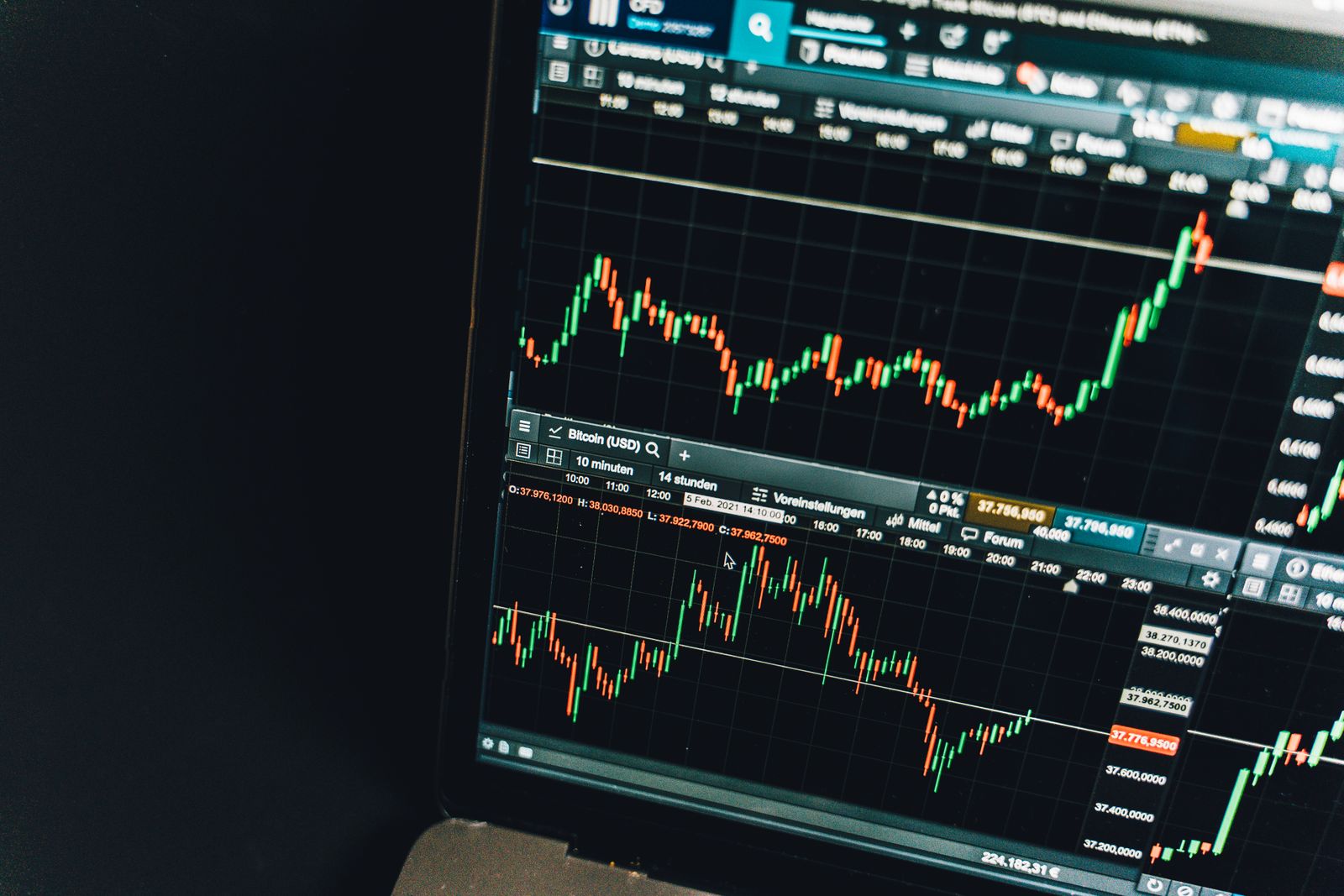
The exchange that taught crypto how to trade leverage with no expiry is no longer an exchange. BitMEX stopped trading, deposits and new positions at 04:00 UTC on September 23, 2026, ending an 11-year run — and the wind-down is not finished for anyone who left a balance behind.
CoinDesk confirmed the shutdown, and BitMEX’s own closure notice set the terms months in advance. For US readers the story is less about a price event than about a structural one: the venue that invented the perpetual swap was the venue Americans were never allowed to use in the first place, and the product it popularized is only now arriving onshore.
What actually closed, and what still works
New account registrations stopped the day the closure was announced in July. From 26 August at 04:00 UTC, the platform ran in reduce-only mode: no new positions, only reductions. BitMEX stated in the same notice that it could force-close open positions at its sole discretion to complete an orderly wind-down, which means selling and buying flow was dripping out of the books for roughly a month rather than landing in one print.
Since the closure time, the only remaining function is withdrawal. Users can still log in, view wallet balances and historical transactions, and pull funds out. Deposits are permanently off — do not send anything to a BitMEX address. BitMEX also unstaked all staked BMEX tokens so holders could withdraw them.
The company said its proof-of-reserves page showed assets exceeding liabilities, and it flagged that some withdrawal processing could be delayed.
The fee clock is running
Verified accounts that fail to withdraw now pay a monthly account fee: an annualized 1% of assets, or a $50-equivalent minimum, whichever is greater, with the fee scheduled to rise over time. The fee applies to KYC-verified accounts holding a balance after the closure time.
Two practical notes. First, a shutdown notice is not a retention notice — the exchange said outright that it would keep contacting users who had not withdrawn. Second, BitMEX warned that an exchange wind-down creates an opening for bad actors: it explicitly cautioned users about phishing attempts and said no accelerated or priority withdrawal service exists.
From market leader to less than 0.01%
At its peak BitMEX handled more than $1 trillion in annual volume and was credited with a majority share of global crypto derivatives trading for a period. The long slide is the part with clean data. Reuters, citing market tracker Kaiko, reported around $400,000 in daily volume and a market share below 0.01% when the closure was announced. Kaiko analyst Thomas Probst said the exit was unlikely to move the wider market precisely because the residual footprint was so small.
Reports around the sale process put BitMEX’s monthly futures volume above $100 billion during parts of 2021, falling into the $25 billion to $30 billion range by late 2024. The company had spent roughly two years trying to sell itself at a reported valuation near $1 billion, with Broadhaven Capital Partners advising and rival exchanges and wallet provider Exodus linked to talks that never closed. BitMEX has not publicly confirmed a failed buyer as the reason for the closure; its stated reason was a strategic review by HDR Global Trading.
The bigger picture still runs the other way. Perpetuals — the no-expiry, continuously funded contract BitMEX introduced in 2016 — now sit at the center of global crypto trading, and CoinDesk reported that centralized exchange derivatives volume alone reached $3.4 trillion in August 2026. The instrument won. The venue that built it did not.
The American chapter: the platform was never legal for US traders
This is where the story stops being trivia for US investors.
The CFTC charged BitMEX on October 1, 2020, alleging it operated as an unregistered futures commission merchant and ran a swaps facility without approval as a designated contract market or swap execution facility. On August 10, 2021, the court entered a consent order imposing a $100 million civil penalty, with up to $50 million offset by payments tied to a FinCEN assessment. The order found that BitMEX failed to implement a customer identification program, KYC procedures that would identify US persons, and an adequate anti-money laundering program.
The remedy that matters for today: as part of that order, BitMEX certified to the CFTC that anyone located in, incorporated in, or resident of the United States is prohibited from accessing the platform, that all active users had been verified, and that all US persons and unverified users had been blocked. In other words, if you are a US person, an active BitMEX account was never a legitimate option after 2021.
On May 5, 2022, the court ordered the three co-founders to pay $10 million each — $30 million total — and permanently enjoined them from further Commodity Exchange Act violations. HDR Global Trading pleaded guilty to a Bank Secrecy Act violation in July 2024, and on January 15, 2025 the Southern District of New York sentenced the company to a $100 million fine plus two years of probation, after prosecutors sought $417 million. Penalties across the civil and criminal cases exceeded $200 million.
Then came the clemency: CNBC reported that President Trump pardoned co-founders Arthur Hayes, Benjamin Delo and Samuel Reed, along with former business development chief Gregory Dwyer and the operating entity HDR Global Trading, in March 2025. The pardons cleared criminal convictions. They did not undo the civil penalties, and they did not reopen the platform to Americans.
What US traders have now
The product BitMEX was famous for is finally available inside the US regulatory perimeter — which is a genuinely different situation from 2020.
On May 29, 2026, the CFTC approved the BTCPERP contract submitted by KalshiEX, allowing a perpetual referencing the spot price of bitcoin to be listed as a futures contract, and issued a contemporaneous policy statement on how it will review future perpetual listings. The same day, CFTC staff issued Letter No. 26-17, confirming that certain crypto perpetuals may be categorized as foreign futures, with a no-action position for Coinbase Financial Markets around posting customer crypto as margin with a foreign broker affiliate.
On June 15, 2026, Kraken launched CFTC-regulated perpetual futures for eligible US clients on Kraken Pro, listed on Bitnomial — the CFTC-licensed exchange, clearinghouse and FCM owned by Kraken parent Payward — with an 8-hour funding rate. Kraken’s release put perpetual volumes at more than $60 trillion in 2025.
For investors who want leveraged bitcoin exposure without perpetual funding mechanics, CME Micro Bitcoin futures have traded since May 2021: 0.1 BTC per contract, cash-settled to the CME CF Bitcoin Reference Rate, no wallet and no delivery.
A venue checklist before your next deposit
BitMEX’s exit is a template for what to read before funding any platform:
- Registration. Check CFTC registration and the CFTC RED List of entities that appear to require registration but do not hold it. Offshore does not automatically mean fraudulent — it does mean your recourse is different.
- Wind-down terms. BitMEX’s fee clause existed before the closure and survived it. Read the sections on account fees, early settlement and the exchange’s discretion to force-close.
- Insurance funds and reserve claims. An insurance fund is not deposit insurance, and a proof-of-reserves snapshot is a snapshot.
- Operating history is not a guarantee. BitMEX’s record of zero funds lost to hacks over more than 11 years is real — and the exchange still closed and started charging idle balances 1% a year.
- Concentration. Keeping trading capital on one venue, especially a leveraged one, is a single point of failure regardless of how the venue is regulated.
If you still trade offshore
Offshore venues remain where deepest perpetual liquidity and the widest contract selection live, and that has not changed this week. What changes is the disclosure: on an offshore platform you are relying on foreign rules, foreign courts and a firm’s own solvency, with limited US remedies if withdrawals slow down. Platforms such as Binance and Bybit serve US-eligible products in defined scopes — size positions so that a frozen or delayed withdrawal is survivable, not fatal.
The US tax and record-keeping angle
For US taxpayers, digital assets are treated as property, and a disposition — selling, exchanging, or paying with crypto — produces a capital gain or loss you report on Form 8949 and Schedule D; the IRS set that framework out in Notice 2014-21. Withdrawing your own coins is not a taxable event by itself; closing a leveraged position is.
The detail that gets overlooked in exchange closures: BitMEX was not a US broker, so it was never part of the Form 1099-DA reporting regime that US brokers use for gross proceeds and, for covered digital assets, cost basis. If you traded there, the record of your entries, exits, funding payments and basis is yours alone to reconstruct. Download your trade history and statements now, while login access still exists — a closed exchange does not have to keep serving data forever, and its fee structure for lingering accounts already tells you which way the incentives point.
The perpetual swap outlived its inventor. Whether your own records, custody choices and venue list outlive the next shutdown is still a decision you control.
🚀 Ready to Start?
The world's largest crypto exchange 👋 Sign up on Binance with code HERMESS and get fee discounts!
⚠️ This content is for informational purposes only, not financial advice. Crypto investing involves risk. Always do your own research (DYOR).
🔥 Also on Bybit
Bybit is a top-3 global exchange. Sign up with code 7LMZ0G for trading fee discounts!
Sign Up on Bybit →⚠️ Crypto investing involves risk. Always do your own research (DYOR).