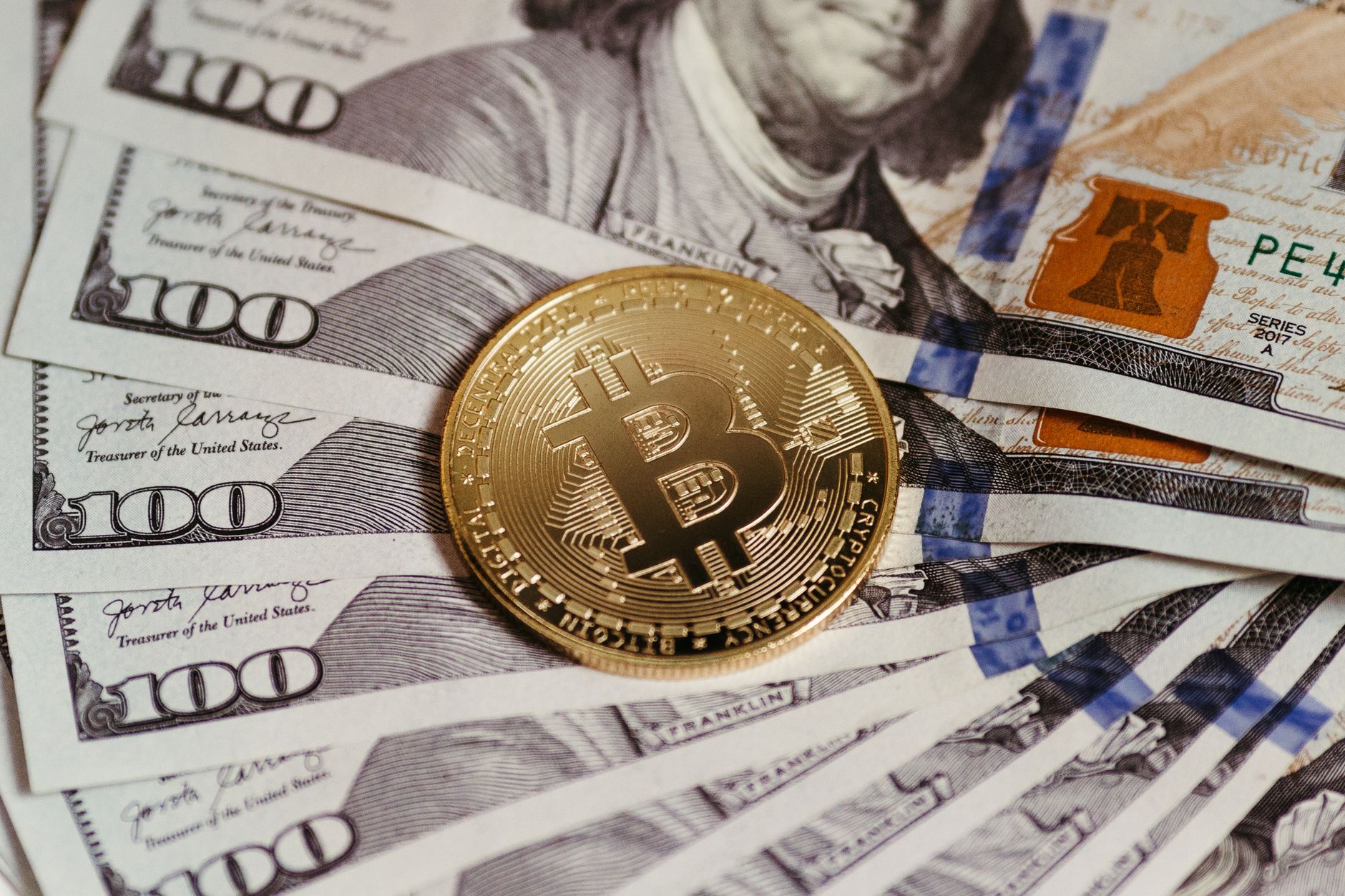
Bitcoin just did something it hasn’t done since last November: it broke decisively above its 200-day moving average — and it didn’t stop there. Over the past week, BTC surged roughly 23%, climbing to around $77,000 and posting a 100-day high alongside gold. The catalyst? The US Treasury stepped into the bond market with a playbook officials are insisting is “not QE” but that markets have already started pricing as a soft version of yield curve control.
For American investors, this is the single most important macro story of the month. Here’s what happened, why it matters for your portfolio, and exactly what a US-based investor should do next — including the tax traps most people will miss.
What Did the Treasury Actually Do?
On the week of August 17, with the long end of the curve under sustained pressure and benchmark 10-year yields threatening to spike through levels that would have blown up the federal debt service bill, the Treasury unveiled a coordinated debt-management package: heavier issuance at the short end, targeted buybacks further out the curve, and a public commitment to “orderly term-premium management” — a phrase that sent bond traders scrambling for the history books.
The market’s verdict was instant. The 30-year yield fell hard, and risk assets ripped higher. Treasury officials, wary of repeating the 2020 “it’s not QE, it’s not QE” farce, went out of their way to label the operation “a liquidity-neutral liability management exercise.” Crypto traders had a simpler name for it: treasury yield curve control 2026, except nobody at the Fed will admit it.
Whatever you call it, the effect is the same: the US government just demonstrated, in broad daylight, that it will not allow borrowing costs to run away while it refinances a $38+ trillion debt pile. When the sovereign backstop becomes explicit, hard assets with zero counterparty risk — Bitcoin and gold — become the obvious overflow valve. That’s the entire bull thesis in one paragraph.
The Numbers Behind the Rally
- Bitcoin +23% week-over-week, reclaiming the 200-day moving average for the first time since November 2025 and printing a 100-day high near $77K.
- Total crypto market cap jumped roughly $500 billion in seven days, pushing the aggregate to about $2.74 trillion.
- Spot Bitcoin ETFs saw a single-day net inflow of $608 million, with BlackRock’s IBIT alone accounting for 83% of that flow. Ethereum ETFs recorded their largest inflows since last October — a clear sign institutional risk appetite is broadening beyond BTC.
- Strategy (formerly MicroStrategy) swung from a $13 billion paper loss to a $1.4 billion paper gain on its Bitcoin holdings, adding fresh fuel to the Saylor narrative.
- Ray Dalio publicly advised buying “a little bit of Bitcoin” as a hedge against the US debt crisis — a striking endorsement from the man who built Bridgewater on macro risk parity.
- Standard Chartered raised its year-end target and called $100K “potentially too conservative” if the Treasury keeps intervening. For a bitcoin price prediction for August 2026 and beyond, the bank now sees $100K as a floor scenario, not a ceiling.
Why This Rally Is Different for US Investors
This isn’t a retail meme rally. It’s a macro-driven repricing of the US sovereign credit risk, and it comes with a regulatory backdrop that has genuinely changed under the current administration.
Regulation: The Trump-Era Framework Is Finally Taking Shape
- CLARITY Act: The bill that would hand the CFTC explicit spot-market jurisdiction over digital commodities is stuck in Congress. CFTC leadership has had enough: the Chair publicly warned that if lawmakers keep stalling, the CFTC will act on its own, including moving on leveraged crypto trading rules without waiting for statutory blessing.
- SEC under Paul Atkins: The SEC has pivoted from the enforcement-first posture of the previous regime to a rulemaking agenda. The vibe shift is real — the agency that sued every project in sight in 2023 is now publishing frameworks instead of subpoenas.
- GENIUS Act: The stablecoin framework is already law, giving US-issued stablecoins a clear regulatory lane.
- Ripple CEO: After a White House meeting, Brad Garlinghouse said the rules governing crypto “are close to being finalized.”
The Tax Angle Every American Needs to Know
Here’s where most retail guides fail you. As a US taxpayer:
- Capital gains treatment: Short-term gains are taxed at ordinary rates up to 37% plus the 3.8% NIIT; long-term gains fall into the 0/15/20% brackets. With BTC up 23% in a week, a lot of 2026 tax bills just got bigger.
- 1099-DA is coming: Starting in 2026, brokers must report digital asset transactions to the IRS on Form 1099-DA. There is nowhere to hide, and cost-basis tracking is now non-negotiable.
- The wash-sale bomb: Under the One Big Beautiful Bill Act (OBBB), the wash-sale rule applies to crypto from January 1, 2026. Sell BTC at a loss and rebuy within 30 days? That loss is disallowed. This is one of the highest-SEO-value tax changes of the year and most Americans still don’t know it applies to them. If you’re harvesting losses after this rally, mind the 30-day window — and consider the stablecoin bridge strategy below.
The USDC Bridge: Your Best Tax-Smart Parking Spot
When you want to de-risk without triggering a taxable event, USDC is the answer for US investors: it’s regulated by the NYDFS, maintains a 1:1 dollar reserve, and — critically — the IRS treats USDC, USDT, GUSD, PYUSD, and USDP as “cash equivalents.” Converting crypto to USDC is generally not a taxable event and doesn’t trigger 1099-DA reporting. That makes it the cleanest “sell to safety” tool in the American toolkit: take profits into USDC after a +23% week, sit out the volatility, and rotate back in without wash-sale or reporting headaches.
The Local View: Bulls, Bears, and the Fees That Matter
- Michael Saylor called the move the “most profound breakout” in the asset’s history. Take that with Saylor’s usual hyperbole, but the Strategy P&L swing is objective data.
- Caitlin Long argues the four-year cycle narrative is dead — macro policy, not halving math, is now the driver. This week’s action supports her.
- Peter Schiff, as always, is the contrarian: his latest take is that AI, not debt, is the biggest threat to the dollar’s purchasing power. Worth a read precisely because he’s usually wrong about Bitcoin and right about the dollar’s long-term decline.
And for those acting on this rally: exchange fees matter more than ever when you’re trading volatility. Current US pricing: Coinbase Advanced runs about 0.60% taker / 0.40% maker; Kraken Pro sits around 0.25–0.40%; Binance US spot is a flat 0.10%; Bybit spot is also 0.10%. If you’re hunting for the best crypto exchange in the USA by fees in 2026, the spread between 0.10% and 0.60% on a $10,000 round trip is $100 — that’s real money when you’re scaling in and out of a 23% move.
What US Investors Should Do Now
- Reassess your hedge thesis. If you own Bitcoin as an “is bitcoin a hedge against US debt crisis” trade, the Treasury just validated it. If you own it for other reasons, don’t confuse a macro bid with a fundamental one.
- Check your cost basis before you trade. With 1099-DA and wash-sale rules live, sloppy tracking is now an audit risk, not just a paperwork annoyance.
- Use USDC as your parking lot. Take partial profits into USDC to lock in gains tax-efficiently while staying one swap away from re-entry.
- Mind leverage if you’re on a US platform. With the CFTC threatening to regulate leveraged crypto trading unilaterally, margin positions on US venues could face abrupt rule changes. Keep positions conservative.
- Don’t chase the 200-DMA. The breakout is real, but $77K after +23% is not a low-risk entry. Scale in, keep dry powder, and let the Treasury’s next move — not the last one — set your pace.
This article is for informational purposes only and does not constitute financial, legal, or tax advice. Consult a qualified US tax professional before making decisions that trigger wash-sale or capital gains consequences.
🚀 Ready to Start?
The world's largest crypto exchange 👋 Sign up on Binance with code HERMESS and get fee discounts!
⚠️ This content is for informational purposes only, not financial advice. Crypto investing involves risk. Always do your own research (DYOR).
🔥 Also on Bybit
Bybit is a top-3 global exchange. Sign up with code 7LMZ0G for trading fee discounts!
Sign Up on Bybit →⚠️ Crypto investing involves risk. Always do your own research (DYOR).