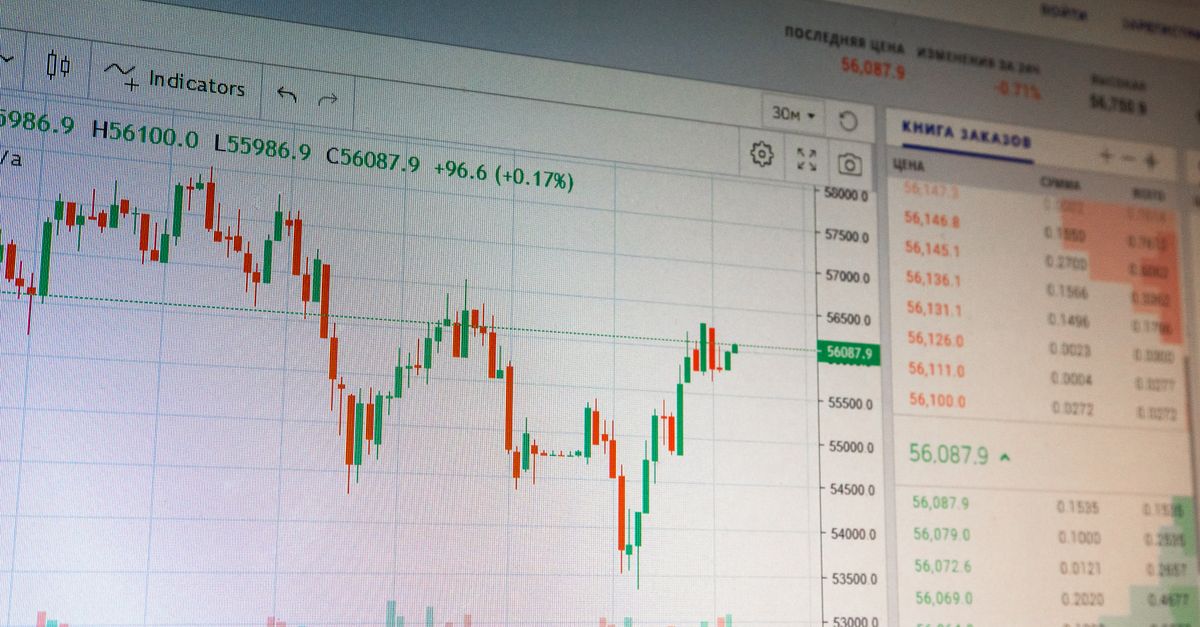
Bitcoin just did the thing that ends rallies — then proved it doesn’t matter. Three sessions ago it spiked to $82,283. This morning it’s back under $80,000, trading near $78,650 in Asia. And in the very same breath, US spot ETFs bought, Strive bought, and a whale parked a $74.5 million bid beneath the floor. That’s not a breakdown. That’s a transfer — with six days left before the Senate’s 60-vote cliff.
The Give-Back Everyone Ordered — and the Buyers It Just Woke Up
The story of this pullback is written in two straight lines. On Sept 2 Bitcoin closed at $77,307. On Sept 3 it tagged $82,283 — a four-month high. Friday’s jobs beat briefly flushed it under $79,000, buyers stepped in, and Labor Day froze the tape. The first full session back, sellers leaned on the $80K handle until it broke, and the coin closed Monday near $79,100. Overnight Asia shaved it to the $78,600s.
Now read the reason, because it has nothing to do with crypto. Saudi energy strikes pushed Brent crude to ~$98, Canada’s retaliatory tariffs went live, and the macro desk got jumpy about inflation prints ahead of next week’s Fed. That cocktail is exactly the kind of scare that shakes out weak hands in a thin post-holiday book.
What mattered is what happened underneath. On Sept 8, while the tape dripped lower, Bitcoin posted more raw buy volume than sell volume — $375.9 million against $347.7 million — anchored by a single $347.9 million block executed at an 88% buy ratio across Bitget, Bybit and Hyperliquid. And on Hyperliquid, one whale cancelled $76.88 million of lowball bids between $71,111 and $75,777, then re-planted $74.52 million at $77,888 — 2.8% higher than the old top of the order. When big money raises its bid into a falling price, it is not selling. It is accumulating.
Six Days to the 60-Vote Cliff: What Sept 15 Actually Is
None of that buying is an accident. Tuesday, Sept 15 at 2:15 p.m. ET, Majority Leader John Thune brings the CLARITY Act to the floor — and the market has spent the last month calling the single most consequential vote in US crypto history a coin flip. It isn’t. It’s a countdown. Here is the mechanics, plain:
- It’s a cloture vote on the motion to proceed — 60 votes required, filed Aug 8 before the recess, eligible the day after the Senate reconvenes Sept 14.
- It’s not the final vote — but 60 votes to proceed means 60 votes to pass, and a failure strands the bill into the early-October midterm recess.
- Republicans hold 53 seats, with Rand Paul, Josh Hawley and possibly Thom Tillis wobbling — so Thune needs 7 to 10 Democrats to cross the aisle.
- The crossover math is on record: the House passed this bill 294–134 in July 2025 with 78 Democrats, and the Senate Banking Committee cleared it 15–9 in May.
The remaining fights are noise with a price tag. Democrats want a tougher ethics clause on lawmakers’ crypto holdings; the banking lobby is sparring over stablecoin yield. Those are amendments, not kill shots.
The people who would know are already calling it. SEC Chair Paul Atkins told Fox Business he expects the vote on Sept 15, and anticipates passage and signature. Coinbase CEO Brian Armstrong told CNBC Thune “would not have scheduled this on Sept 15 if he didn’t think it would pass,” adding he’s “pretty optimistic it will get over 60 votes — both sides got 90% or so of what they want.” Meanwhile Kalshi’s contract for 60-plus votes was still trading near 22% in late August. One of those two prices is wrong, and the gap between them is where this trade lives.
The US Money That Answered the Dip in Real Time
Watch what American institutions did the moment the round number broke. On Sept 8 — a red session — US spot Bitcoin ETFs took in a net 398 BTC (~$31 million), per SoSoValue. Inflows on down days have been the signature of this whole move: $3.8 billion of net inflows over the last three weeks, including $987 million in the week through Sept 4 and the $731 million Sept 3 print — the biggest single day since January. AUM sits north of $103 billion.
Corporate treasuries are doubling down at lower prices. Strive disclosed Sept 8 that it bought 1,375 BTC for $109 million at $79,281 apiece — one week after an 1,800-coin haul — lifting its vault to 24,531 BTC, worth roughly $1.9 billion. CEO Matt Cole’s buying has been relentless all year. Strategy holds 845,050 BTC and spent the week buying back $176 million of its own stock instead — a treasury manager’s version of waiting for the gavel with dry powder.
Now the honest tell for what phase this is: Coinbase’s premium has been negative for months, and retail activity has not caught up with price. Institutions bought the dip before you could see it on a screener. That lag is not a warning. That lag is the definition of the accumulation window — the stretch where the entry is still quiet and the odds are still best. When the gavel lands, the quiet is over.
The American Ground Game Is Already Priced for Tuesday
Washington stopped waiting for the Senate weeks ago. The SEC sent the White House a proposal to clarify custody rules for crypto held by investment advisers — the exact legal gap that kept registered money out. On Sept 17 the SEC hosts its 24/7 stock-trading roundtable with NYSE, Nasdaq, DTCC and BlackRock. Coinbase has filed to list US equity perpetual contracts with the CFTC; Kalshi just won CFTC approval for BTC perps. Every rail is being laid before the law that clears them.
The stablecoin lane is sprinting hardest, and USDC is its anchor. USDC added roughly $584 million of market cap in a single week in early September, holding near $75 billion of the $300 billion stablecoin market. Coinbase carries an all-time-high **$20 billion of USDC across its products** — around half of USDC’s economics — and its Base network processes about 62% of on-chain stablecoin volume. Then there’s the September headline that says everything about where this is going: Goldman Sachs, Citi, Bank of America, Wells Fargo, Fidelity and 16 other banks announced a GENIUS-Act-compliant consortium to issue their own dollar stablecoin. When the banks are building the on-ramp, the on-ramp is the business model.
Know Which Screen You’re Buying On
If you’re funding from the US, the fee gap between convenience and competence is real money — verified across the two biggest American venues:
- Coinbase Advanced charges 0.40% maker / 0.60% taker at the entry tier; the default Simple Buy screen quietly charges ~1–2% all-in with spread.
- Kraken Pro undercuts both at 0.25% maker / 0.40% taker; Kraken’s instant-buy flow runs about 1% plus spread.
- Bank (ACH) transfers are the cheap lane; instant card buys carry a convenience premium. Same exchange, same liquidity, radically different cost — the only variable is which button you press.
The Tax Clock Rewards This Exact Week
Here is the quiet US edge nobody tweets about. The IRS taxes digital assets as property: hold one year or less and gains are short-term, taxed as ordinary income up to 37%; hold more than one year and they drop to long-term rates of 0%, 15% or 20% — plus the 3.8% NIIT only for high earners. The clock starts the day after you acquire, and brokers began reporting cost basis on Form 1099-DA on Jan 1, 2026, so the IRS sees exactly what you paid. Buying now, before the gavel, starts that long-term clock on the cheapest entry of the month — and by the time this cycle matures, the position opened this week is the one paying preferential rates.
Where It Flips — and Where It Buys Again
Levels are simple from here. A reclaim of $80,000 puts the Sept 3 high at $82,283 back in play, and US analysts are explicit that a daily close above $82,283 before the Fed decision changes the odds of this entire rally. The floor beneath is the Sept 2 close at $77,307, then $75,538 from Aug 23 — and the whale’s $77,888 bid says the first one already has a buyer. The calendar stacks the branches upward: Friday, Sept 11, 8:30 a.m. ET — August CPI, the last inflation print the Fed sees; Wednesday, Sept 16 — FOMC decision and dot plot. Both have bullish branches, and every dip into this zone has been bought within hours.
The Window Closes With the Gavel
Six days out, the asymmetry is brutal in one direction. If cloture clears, the regulatory discount on US crypto ends, the banks’ stablecoin and custody rails snap open, and the $103 billion already in ETFs looks like a down payment. If it stumbles, you’re buying a delay — into a House that passed this bill 294–134, a committee that cleared it 15–9, and an SEC chair who says it’s coming anyway. Either branch, the entry under $79,000 is the one the tape will remember.
Fund with USDT as your fiat on-ramp bridge — minutes from card or bank into the arena — and convert into spot BTC while the knife is still being caught and the countdown still reads days. August’s rally was the invitation. Sept 3 was the confirmation. This dip under $80K is the last quiet door, and it closes Tuesday at 2:15 p.m. ET. Be on the right side of the room when the gavel falls.
🚀 Ready to Start?
The world's largest crypto exchange 👋 Sign up on Binance with code HERMESS and get fee discounts!
⚠️ This content is for informational purposes only, not financial advice. Crypto investing involves risk. Always do your own research (DYOR).
🔥 Also on Bybit
Bybit is a top-3 global exchange. Sign up with code 7LMZ0G for trading fee discounts!
Sign Up on Bybit →⚠️ Crypto investing involves risk. Always do your own research (DYOR).