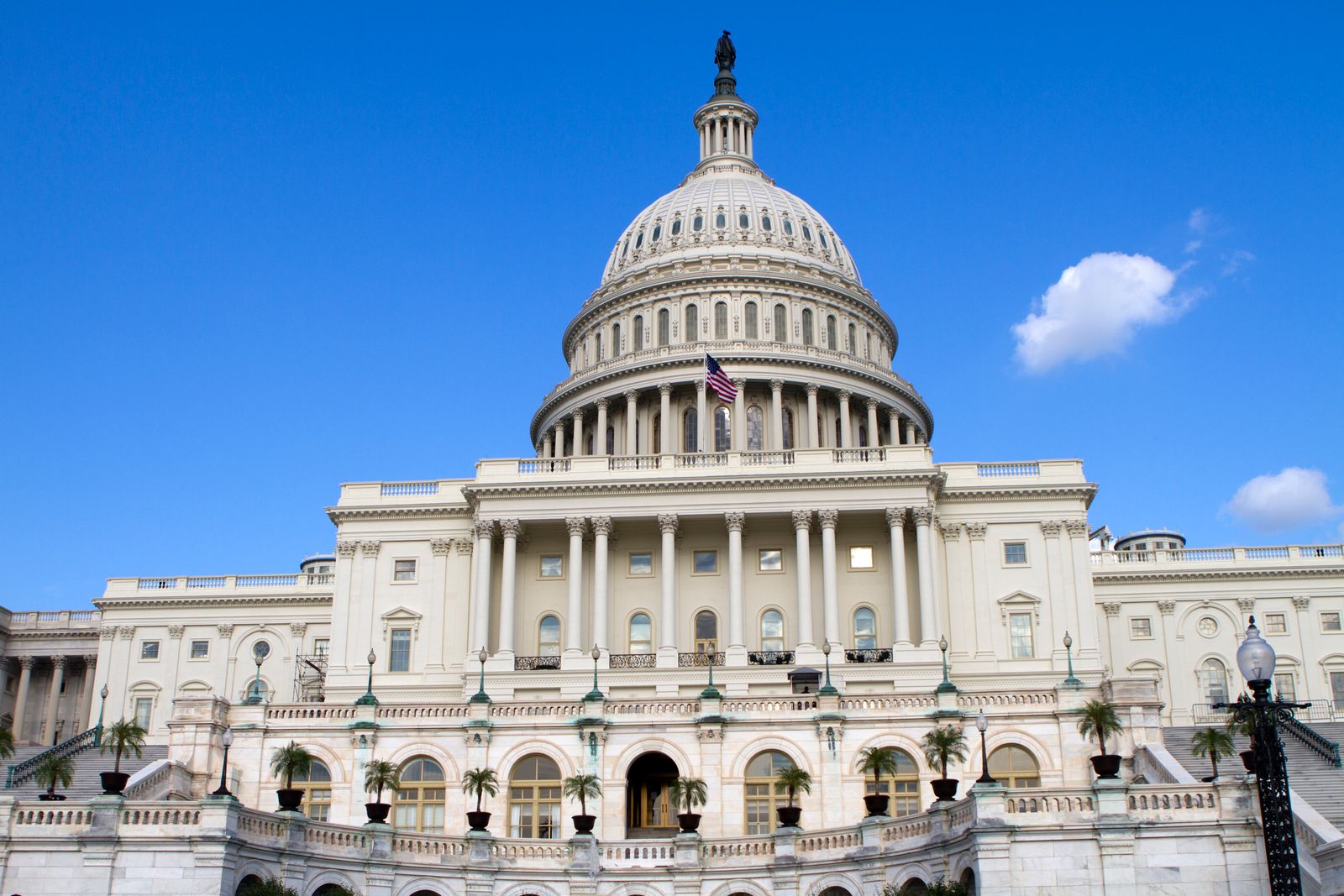
Bitcoin just won a historic committee vote. It did not win a government buy order. The American Reserve Modernization Act would lock up qualifying federal Bitcoin, change the custody rules and demand an inventory. It authorizes the Treasury to buy exactly zero coins.
On September 16, the House Financial Services Committee advanced H.R. 8957, or ARMA, by 28–21, the first full-committee passage of a strategic Bitcoin reserve bill. All votes for passage came from Republicans; all opposing votes came from Democrats. The committee’s markup record also records the adoption of Rep. Bryan Steil’s substitute and the defeat of Rep. Maxine Waters’ amendment, 21–28.
That distinction matters as Bitcoin trades around $81,300. ARMA is a custody bill, not a purchase bill. Its immediate policy significance is a proposed statutory framework for assets Washington already owns. Its biggest political obstacle sits across the Capitol: the Senate rejected a CLARITY Act procedural motion just one day earlier.
What the reserve would actually hold
Rep. Nick Begich, R-AK, introduced the measure on May 21, 2026, with Rep. Jared Golden, D-ME, as a key Democratic co-lead. Golden’s support gave the proposal bipartisan sponsorship; it did not produce a bipartisan committee vote under Chairman French Hill, R-AR. The bill’s legislative record must be read alongside the adopted amendments.
The 19-page introduced bill opens with this purpose: “To establish a Strategic Bitcoin Reserve and other programs to ensure the transparent management of Bitcoin holdings of the Federal Government.” That is the opening portion of its longer formal title. The adopted Steil substitute is a separate 23-page document, an important distinction when comparing versions.
ARMA would establish two Treasury structures: a Strategic Bitcoin Reserve for qualifying federal BTC and a Digital Asset Stockpile for qualifying non-Bitcoin digital assets, including forfeited tokens. It would put the reserve created through the March 2025 executive order on a statutory footing.
Agencies would have 60 days after enactment to give Treasury a complete accounting of Bitcoin and other digital assets held, seized or controlled, followed by annual submissions. Treasury would establish the two structures within 180 days. Qualifying holdings would move into them within 30 days after establishment.
The word qualifying does real work. The substitute excludes assets that another law requires for other purposes. A wallet controlled by an agency is therefore not automatically a reserve asset. Custody, final forfeiture, ownership and obligations to victims are separate questions. The broad inventory requirement captures holdings that may never qualify for permanent reserve treatment.
Steil changed the clock—and weakened the reporting promise
The central change in Steil’s substitute is the 20-year clock. The introduced text gave later deposits their own holding periods: Bitcoin deposited following a 2031 forfeiture could remain locked until 2051. The substitute instead measures the period from enactment, placing existing and future reserve holdings on one timeline. Later deposits would have less time remaining on that clock.
During the holding period, reserve BTC cannot be “sold, swapped, auctioned, encumbered, or otherwise disposed of for any purpose.” The substitute also reduces the retention period for assets received through forks or airdrops from 5 years to 1 year.
Transparency moves in the opposite direction from the bill’s headline ambition. Proof-of-reserve reporting falls from quarterly to annual, and the explicit requirement to publish the report on Treasury’s website disappears. Mandatory accounting can improve what government knows without guaranteeing investors the same visibility.
Stockpile sale proceeds would first pay management costs, with excess proceeds directed toward reducing national debt. The introduced version instead specified more BTC acquisition or debt reduction. That revision removes a potential reinvestment channel from the operating provisions.
State participation also requires precision. States could voluntarily place their Bitcoin in segregated accounts within Treasury’s Strategic Bitcoin Reserve. The adopted text does not direct them to deposit it at the Federal Reserve. Those are different institutions. The bill also recognizes lawful private ownership and self-custody, describing control of private keys as fundamental to “financial sovereignty, privacy, and personal liberty in the digital age.”
The missing purchase order
Sen. Cynthia Lummis’ BITCOIN Act, S.954, explicitly proposed purchases of 200,000 BTC annually for five years, totaling 1,000,000 BTC, with a minimum 20-year holding period. Its purchase-program language is a useful comparison: ARMA contains no equivalent purchase mandate.
Instead, Treasury and Commerce would have 180 days to study additional acquisition through budget-neutral methods and report to Congress. The analysis must examine actual economic costs, taxpayer exposure and debt effects. A study of whether lawful acquisition is possible supplies neither a purchase authorization nor an order to execute trades.
The text expressly withholds authorization for “any borrowing or other financing, including the pledging, encumbering, or use of any digital asset or other asset of the United States as collateral.” Treasury cannot treat that study as permission to borrow against public assets to buy Bitcoin.
Treasury Secretary Scott Bessent has publicly ruled out government market purchases while describing continued accumulation through confiscated assets. His stated pace is “deliberate speed.” Neither that phrase nor the study creates an ETF-style stream of buy orders.
There are two other easily misread provisions. Treasury must submit a study within 1 year examining conditions for sales before the minimum holding period; the study itself does not permit an early disposal. After the minimum period, Treasury may recommend selling up to 10% during any two-year period. A recommendation is not an automatic liquidation schedule.
The market bought a narrative; leverage supplied the acceleration
The September 19–20 snapshot puts BTC near $81,300, with a $79,925.66–$81,674.72 24-hour range and a $75,038.12–$81,674.72 seven-day range. Market capitalization is about $1.633 trillion, with approximately $35.7B in daily volume. This is its first sustained move above $80,000 since September 7; it was around $76,000 on September 17.
The rally’s mechanical accelerant was a short squeeze. One 24-hour snapshot records roughly $238M in BTC short liquidations and $470M in shorts across crypto. A separate one-hour reading shows about $192M in liquidations, including $183M in shorts and approximately $119M in BTC shorts. Forced short covering adds buying pressure as leveraged positions are closed.
Another snapshot reports $324.88M in total liquidations affecting 101,000+ traders. That cannot be the same measurement as a broader total containing $470M of shorts alone. These readings must remain separate; adding them would double-count an unspecified mix of windows and venue coverage.
Spot Bitcoin ETFs recorded $433.03M in net inflows on September 18, including approximately $311M into Fidelity FBTC and $108M into BlackRock IBIT. The supplied characterization of FBTC as “about 96%” does not reconcile with those dollar amounts. The dollar figures show that Fidelity led; they do not support that percentage.
Two days of BTC ETF inflows totaled approximately $591M, reversing about $520M of earlier weekly outflows. Ethereum ETFs added $144M on September 18, including $114M for ETHA and $26.24M for FETH. These are identifiable investment flows. ARMA authorizes no matching government purchase flow.
🚀 Ready to Start?
The world's largest crypto exchange 👋 Sign up on Binance with code HERMESS and get fee discounts!
⚠️ This content is for informational purposes only, not financial advice. Crypto investing involves risk. Always do your own research (DYOR).
Washington still has no reconciled Bitcoin balance
The size of the government’s holdings is itself part of the policy problem. The competing figures in the reporting snapshot are:
| Source or attribution | Reported holdings | What the number does not establish |
|---|---|---|
| Arkham Intelligence | Approximately 324,527 BTC | A legally reconciled Treasury reserve balance |
| Bitcoin Treasuries | 328,372 BTC, valued around $25B | Whether every attributed coin qualifies for the reserve |
| Glassnode government-wallet tracking / DOJ forfeiture-fund disclosures | Approximately 198,109 BTC in July 2026 | An all-agency, same-date inventory |
| Bessent’s public description | Approximately 207,000 BTC, worth $15B–$20B | Reconciliation with third-party valuations around $24B |
Treasury has not published a reconciled holdings list establishing one authoritative total. Different reporting dates, address attribution and legal treatment can produce different figures, but the public data do not resolve each discrepancy. Selecting the largest number and labeling it “the reserve” would erase precisely the uncertainty ARMA seeks to address.
Historical seizure figures also need care. The briefing’s 143,000+ BTC attribution to the Silk Road/James Zhong case should not be treated as a verified Zhong total. The Justice Department’s account describes a much smaller seizure, approximately 50,676 BTC in November 2021, followed by additional voluntary surrender. Silk Road-related cases cannot be collapsed into one defendant’s balance.
Other major provenance figures include approximately 94,000 BTC recovered in February 2022 in the Bitfinex investigation involving Ilya Lichtenstein and Heather Morgan, and a reported approximately 15,000 BTC across other DEA, FBI and IRS-CI cases. Historical recoveries are not a current balance sheet: restitution, forfeiture outcomes, transfers and prior disposals matter.
The useful investor consequence of ARMA’s 60-day accounting requirement and annual updates is a path toward reconciling these categories. Yet the weakened public-reporting language means a mandatory agency inventory should not be confused with a guaranteed public wallet dashboard.
The Senate is the wall
Committee approval does not enact ARMA. It still needs passage through the full House, the Senate and the presidential enactment process. Golden’s sponsorship is meaningful political support, but the committee’s strict party split supplies no evidence that the Senate votes are already there.
CLARITY demonstrates the problem. On September 15, the Senate rejected cloture on the motion to proceed to H.R. 3633, the Digital Asset Market Clarity Act, 49–50, in Record Vote 234. This was a procedural defeat, not a final-passage vote. The official roll call specifies the three-fifths threshold and lists the vote at 2:19 p.m.; the floor chronology places voting’s start at 2:18 p.m. and the announced result at 3:00 p.m.
Sen. Tillis moved for reconsideration, and the bill remains on the Senate calendar. A route to reconsideration preserves a procedural option; it does not turn 49 votes into the support needed to advance. ARMA and CLARITY address different subjects, but both face the task of assembling a Senate coalition.
Regulators are moving on a separate track
On September 17, the SEC issued Release 2026-90, granting a temporary, conditional Innovation Exemption for qualifying Tokenized Securities Venues. The SEC announcement permits specified trading of tokenized NMS stocks through permissioned automated market makers and liquidity pools. The exemptions expire 5 years after publication, and the agency requested public comment.
That is a bounded change to securities-market infrastructure. A tokenized stock remains a claim with securities-law obligations; a permissioned venue’s exemption does not legalize every on-chain trading arrangement.
The same day, the CFTC sent RIN 3038-AF80, “Regulation Crypto Asset Transactions and Regulation Crypto Asset Markets,” to White House OIRA. The OIRA entry says prerule, with review pending. It is not a proposed rule, and the substantive text remains confidential. Investors cannot infer final market-access rules from that listing.
Separately, a CFTC staff no-action position covers qualifying passive software providers that help users interact with registered futures commission merchants, introducing brokers or designated contract markets. It is conditional staff relief concerning registration, not a general exemption for intermediaries.
Taken together, the week’s developments concern three distinct functions: federal asset custody, congressional market structure, and agency treatment of trading infrastructure. Progress in one does not supply legal authority missing from another.
A risk rally inside a tighter macro backdrop
ETH trades near $2,637, with snapshots showing 5.5% or 5.8% daily gains. SOL is up more than 7% around $112, while Hyperliquid’s token has reached a record above $90. Total crypto capitalization is approximately $2.86–2.88 trillion, up 4%–5.2% across the reported readings.
The Fear and Greed Index reached 71, Greed, from 56 the previous day, 63 a week earlier and 62 a month earlier—a 15-point daily jump. That measures a sharp improvement in sentiment, not legislative probability.
On September 16, the FOMC unanimously voted 12–0 to raise rates by 25 basis points to 3.75%–4.00%, its first increase since July 2023. The Fed’s statement confirms the increase. Chair Kevin Warsh described inflation as still elevated and financial conditions as difficult to characterize as restrictive.
WTI settled near $100.30 a barrel on September 18, after exceeding $105 earlier in the week, as Saudi Arabia found an alternative supply route through Oman. The dollar index rose to 100.48 on Friday, a headwind for risk assets. Bitcoin also remains well below its approximately $126,080 October 2025 high and negative year to date.
The quoted Polymarket contracts reflect market wagers: 84% for Bitcoin reaching $84,000 first, 59% for $90,000 before year-end, 25% for $100,000, and 48% for seeing $70,000 before year-end. These are separate event markets, not mutually exclusive pieces of one forecast. None proves that Treasury will become a buyer.
For U.S. investors, ARMA changes no tax treatment
ARMA does not change your tax treatment. It governs federal custody and management, leaving the tax code untouched. Bitcoin is property for U.S. federal tax purposes. Direct Bitcoin ownership is not stock ownership, and Form 1099-DA’s use of “covered security” is a reporting classification; it does not transform Bitcoin into a corporate security. The IRS’s digital-asset guidance explains the property framework.
Custodial brokers began reporting gross proceeds for 2025 transactions on Form 1099-DA. For transactions beginning January 1, 2026, they must also report cost basis for qualifying covered securities, subject to the form’s reporting rules. Gross proceeds are the amount realized from sales before subtracting basis; they are not automatically your taxable profit.
The 2026 Form 1099-DA instructions classify assets acquired before 2026, assets transferred into a broker, and assets acquired when that broker did not provide custody as noncovered. A missing basis entry therefore does not establish that your basis was zero. You need purchase and transfer records to substantiate it yourself.
The DeFi reporting gap needs equally precise treatment. Notice 2024-57 temporarily relieves brokers of specified information-reporting obligations for identified transactions, including wrapping and unwrapping, liquidity-provider activity involving AMMs, staking transactions, certain lending arrangements, short sales and notional principal contracts. It does not exempt every on-chain swap or every DeFi interaction. Its actual text also preserves potential reporting obligations for rewards and other income under other tax-code provisions.
No Form 1099-DA does not mean no taxable income. Staking rewards and lending income can still require reporting. An ordinary crypto-to-crypto exchange—Bitcoin for Ether, for example—is a disposition, even when you call it portfolio rebalancing and receive no dollars. Record the value received, adjusted basis and transaction costs. The IRS transaction FAQs address exchanges between materially different digital assets.
For directly held Bitcoin, IRC Section 1091’s wash-sale rule currently does not apply as it does to stock and securities. Do not generalize that treatment to tokenized shares or assume every crypto-related financial product has Bitcoin’s tax classification. ARMA supplies no new tax exemption for any of them.
Keep a complete transaction history across wallets and exchanges: acquisition dates, timestamps, transfers, quantities, dollar values, fees and disposal records. Match transfers between your own accounts so they are not mistaken for purchases with no basis or sales with unexplained proceeds. Download records while they remain available; a broker should not be treated as your permanent archive.
At filing time, reconcile broker-reported proceeds to the transactions on your return. A mismatch between Form 1099-DA and reported sales can attract IRS scrutiny. Treasury’s proposed obligation to inventory government Bitcoin does not relieve individual investors of the obligation to account for their own.
🔥 Also on Bybit
Bybit is a top-3 global exchange. Sign up with code 7LMZ0G for trading fee discounts!
Sign Up on Bybit →⚠️ Crypto investing involves risk. Always do your own research (DYOR).
The next two weeks: dates that deserve attention
September 22–24: Messari Mainnet, New York City. Conference announcements can add policy commentary and product headlines, but statements from a stage do not amend a bill or complete OIRA review.
September 24, 08:30 ET: a calendar correction matters. The supplied calendar labels this the Q2 GDP third estimate. The BEA’s current official schedule instead lists international transactions and investment-position data on that date, with the Q2 GDP third estimate on September 30 at 08:30 ET. Using the official release date prevents trading around the wrong event.
September 25: Deribit quarterly BTC/ETH options expiration. The cited snapshot puts total notional near $16.6B, split between $14.63B BTC and $1.93B ETH. As of September 14, open-interest put/call ratios were 0.52 for BTC and 0.57 for ETH, meaning calls were roughly twice puts. Estimated maximum-pain levels were $72,000–$75,000. These describe positions and an options-payoff calculation; they do not require the market to settle at those prices. Deribit’s options metrics are the relevant venue reference, and a live page can differ from the dated snapshot.
September 30: SEC fiscal year-end and Q3 close. Institutional rebalancing coincides with the official GDP release date. Fiscal year-end itself does not establish a deadline for an SEC crypto decision.
Glamsterdam: no confirmed Ethereum mainnet date. September 28 is a proposed Sepolia testnet fork date, not a confirmed mainnet activation. The mainnet upgrade has slipped from the first half of 2026 toward Q4; investors should distinguish proposals from confirmed deployment schedules.
ARMA’s practical significance is a possible change in the durability, custody and accounting of federal Bitcoin holdings. Investors should watch the text that reaches the House floor, whether a Senate coalition forms, which holdings legally qualify and what Treasury must disclose publicly. The 28–21 vote advances that process. It does not enact a law, close the government’s accounting gap or authorize a single Bitcoin purchase.
🚀 Ready to Start?
The world's largest crypto exchange 👋 Sign up on Binance with code HERMESS and get fee discounts!
⚠️ This content is for informational purposes only, not financial advice. Crypto investing involves risk. Always do your own research (DYOR).
🔥 Also on Bybit
Bybit is a top-3 global exchange. Sign up with code 7LMZ0G for trading fee discounts!
Sign Up on Bybit →⚠️ Crypto investing involves risk. Always do your own research (DYOR).