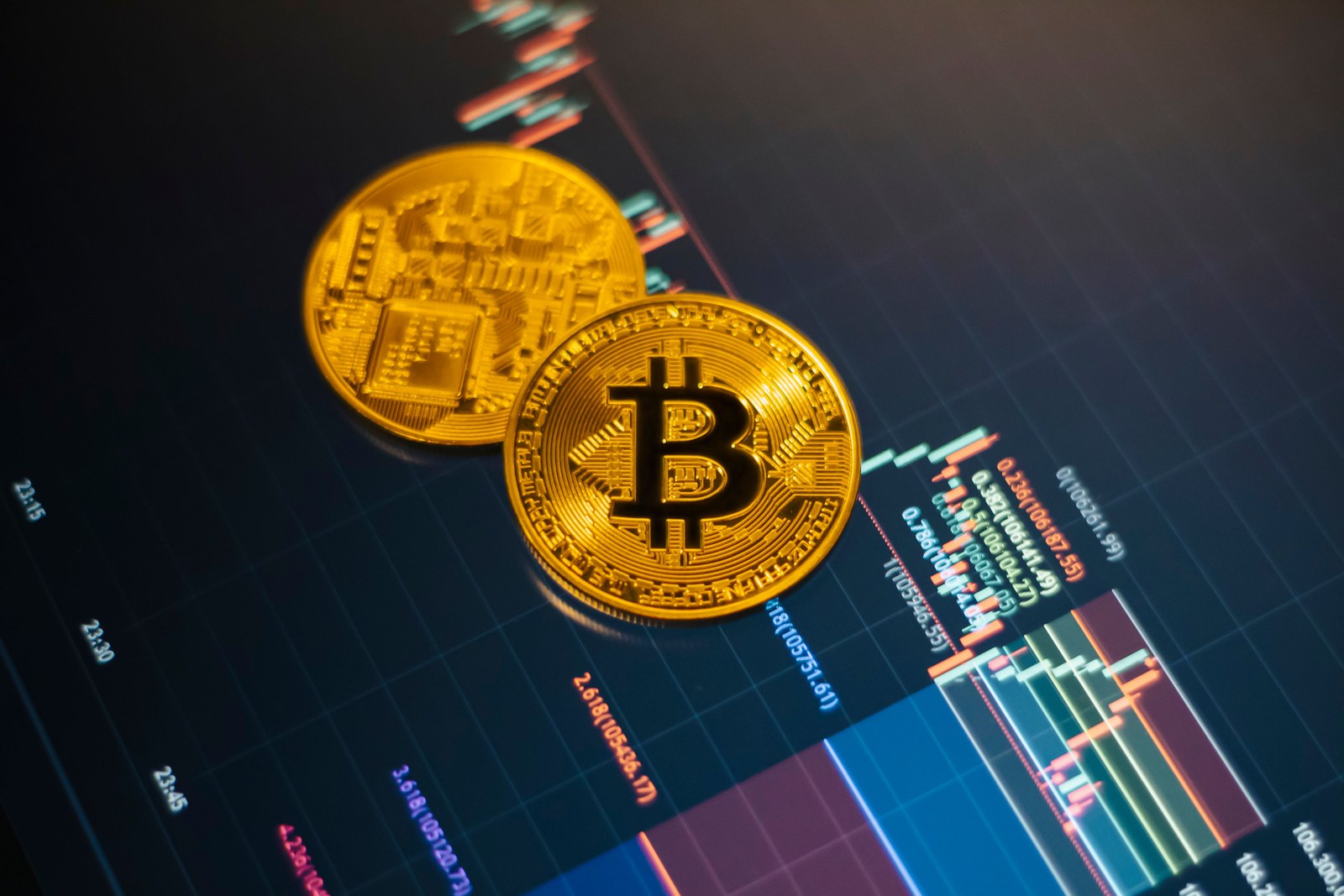
U.S. spot Bitcoin ETFs took in $998.95M, roughly 11,530 BTC, on September 21, their biggest dollar inflow in 11 months. Yet much of that demand probably originated Friday. And Americans buying the ETF wrapper faced a tax distinction: wash-sale planning followed the shares, not ordinary Bitcoin holdings.
The Block reported the figures September 22. The prior larger session was October 6, 2025, at $1.2 billion. The comeback mattered, but the transaction date, ownership structure, and personal cost basis mattered just as much.
Where the money landed
BlackRock’s IBIT attracted $381.4 million, ARK 21Shares’ ARKB received $289.1 million, and Fidelity’s FBTC added $238.8 million. Together, those funds captured $909.3 million, about 91% of the day’s net inflows. In Bitcoin terms, the approximately 11,530 BTC intake was the largest since November 11, 2024, when funds absorbed about 12,560 BTC. CryptoSlate
Morgan Stanley’s new fund drew $62 million, its best session; Bitwise’s BITB added $22 million; and Grayscale’s two funds received roughly $6 million combined. 24/7 Wall St.
The recovery extended beyond Bitcoin: U.S. spot Ether ETFs attracted $269.98 million, their strongest daily inflow since October 7, 2025. Bitcoin briefly reached approximately $87,300 on September 21, its highest since January, before retreating to around $85,400 early September 22, Eastern time. The Block
The monthly and annual pictures still diverged. September’s month-to-date inflows reached $1.31 billion, following August’s $3.52 billion. Yet 2026 year-to-date flows remained approximately $450 million negative. This was the ninth-largest daily inflow since the January 2024 launch, rather than an all-time dollar record. ETF flow recap
A large inflow was a backward-looking signal
Bloomberg Intelligence analyst Eric Balchunas cautioned that reporting delays meant Monday’s total probably reflected Friday, September 18, orders and creation activity. The number therefore did not establish that investors chased Monday’s rally. His colleague James Seyffart reported about $4.5 billion in ETF secondary-market turnover, slightly below Friday’s approximately $4.6 billion. Bloomberg analysts, reported by CryptoSlate
That distinction separates net fund demand from trading activity. The inflow was exceptional; turnover was not. Treating both figures as evidence of the same buying frenzy obscured the timing of the actual investment decisions.
Back above breakeven, with different meanings of cost basis
The average Bitcoin ETF holder returned above estimated breakeven for the first time since January, according to 24/7 Wall St.. The aggregate cost line had fallen from $89,600 in November 2025 to $79,900 in March. September 21 purchases around $86,000 pushed that average upward again.
Dividing the rounded $999 million inflow by 11,530 BTC gives an implied price near $86,640 per BTC. That arithmetic describes the session’s scale; it does not establish any shareholder’s tax basis. An aggregate breakeven estimate and the acquisition records on a tax return answer different questions.
Recovery also remained incomplete. Against the October 2025 high of $126,198, a reference price around $86,600 was approximately 31% lower. Recovering that high required about a 46% gain. 24/7 Wall St. via AOL
The U.S. wrapper: a trust, a brokerage account, and taxable sales
Most U.S. spot Bitcoin ETPs use grantor trusts. IBIT is not an investment company registered under the Investment Company Act of 1940. Its June 30, 2026, SEC Form 10-Q explains that federal tax items pass through to shareholders. The familiar ETF label does not erase that structure.
IBIT sells small amounts of Bitcoin to fund its 0.25% annual sponsor fee. Those disposals generally create taxable events attributable to shareholders, even when they never submit a sell order. iShares’ prospectus describes this treatment. Small trust-sale entries can consequently appear on brokerage tax statements alongside the investor’s own trades.
BlackRock’s tax explanation treats Bitcoin as property whether held directly or through IBIT and confirms that IBIT does not issue a K-1. Sales of ETF interests follow the Form 1099-B route; covered shares carry broker-reported basis. Investors reconcile applicable transactions on Form 8949 and Schedule D. IRS reporting instructions
Direct holdings follow a different reporting path. IRS Notice 2014-21 established property treatment for virtual currency. For 2026 disposals, digital-asset brokers use Form 1099-DA, with required basis reporting for covered digital assets, including qualifying assets acquired for cash after 2025. 2026 Form 1099-DA instructions
Wash-sale planning follows the shares, with an important qualification
Section 1091 addresses stock and securities. A loss sale combined with a substantially identical purchase within 30 days before or after the sale can defer the deduction and add the disallowed loss to replacement basis.
For brokerage planning, assume that selling IBIT at a loss and repurchasing IBIT inside that window triggers a wash-sale adjustment. However, grantor-trust pass-through treatment creates a technical debate about applying Section 1091 to these ETP shares. Securities reporting and the trust’s underlying tax ownership are distinct questions. The statute does not explicitly resolve that Bitcoin-trust distinction, and IRS guidance has not clearly settled whether different spot Bitcoin ETFs are substantially identical. Section 1091; IBIT’s grantor-trust disclosure
Ordinary directly held Bitcoin falls outside the current stock-and-securities wash-sale rule. A genuine loss sale followed by a same-day repurchase therefore does not lose its deduction merely because of Section 1091. That distinction follows from the statute’s scope and Bitcoin’s property treatment; it does not extend to every token bearing a crypto label.
The 2026 Form 1099-DA instructions make the boundary explicit. Box 1i records disallowed wash-sale losses for tokenized securities treated as stock or securities under Section 1091. The form’s existence does not impose wash-sale treatment on ordinary Bitcoin. IRS instructions, Box 1i
Legislation had not erased the distinction. H.R. 10357, the Digital Asset Tax Certainty Act, proposed extending wash-sale treatment to digital assets. It passed the House Ways and Means Committee 38–5 on September 16 but had not become law. Committee announcement
Direct ownership also requires wallet-by-wallet and account-by-account basis records. Revenue Procedure 2024-28 supplied a safe harbor for allocating unused basis as of January 1, 2025. A brokerage-held ETF simplifies that recordkeeping, although trust expense sales still require reconciliation.
The policy backdrop already on the calendar
The September 16 Fed decision had raised rates 25 basis points to 3.75%–4.00%, unanimously. Its published projections showed 16 of 18 officials anticipating additional tightening. This was a policy backdrop already in place, not evidence that ETF demand had neutralized interest-rate risk. FOMC statement
As of September 22, the announced calendar included the Trump–Xi state visit and September 24 White House dinner. Markets had focused on extending the trade truce with its November 10 expiration. These were scheduled events and expectations, not completed diplomatic outcomes. White House announcement; trade-truce reporting
The published data calendar listed PCE for September 30, the employment report for October 2, and CPI for October 14. Those dates described the schedule available at publication, not released results. BEA calendar; BLS calendar
BTIG’s technical framework identified $90,000 as a possible target conditional on $75,000 support holding. It was an analyst scenario, not a promised outcome. BTIG analysis reported by Geo News
The $999 million session demonstrated renewed demand through the ETF channel. For U.S. investors, that channel paired simpler brokerage reporting with fee-related Bitcoin disposals and wash-sale planning. Direct ownership preserved a different wash-sale position while placing wallet-level cost-basis work on the holder. The exposure was Bitcoin in both cases; the tax records and loss-harvesting decisions depended on how it was held.
🚀 Ready to Start?
The world's largest crypto exchange 👋 Sign up on Binance with code HERMESS and get fee discounts!
⚠️ This content is for informational purposes only, not financial advice. Crypto investing involves risk. Always do your own research (DYOR).
🔥 Also on Bybit
Bybit is a top-3 global exchange. Sign up with code 7LMZ0G for trading fee discounts!
Sign Up on Bybit →⚠️ Crypto investing involves risk. Always do your own research (DYOR).