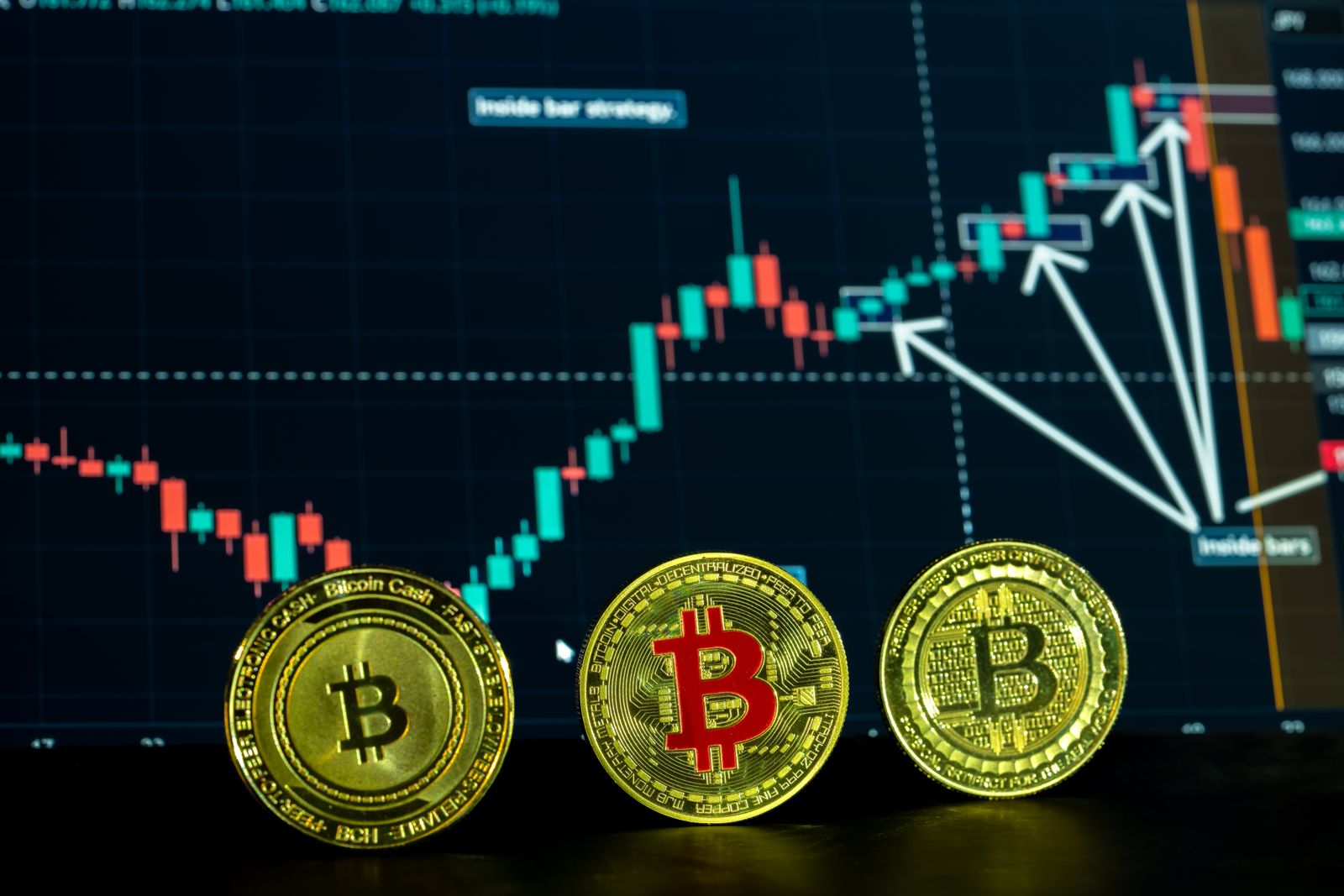
Did you feel that? That sharp exhale at the bottom of the V — the moment the sub-$77,000 panic selling simply ran out of sellers and the bids underneath swallowed it whole. Bitcoin is back at $78,179, up 0.87% in 24 hours, and the dip you were told to fear just turned into the gift you weren’t sure you were allowed to take. The rebound is done. The next leg is being loaded right now — by a jobs report due in hours, and a Senate vote eleven days out.
The V-Bounce Already Proved Who Owns This Market
Let’s be precise about what happened. The US–Iran headlines spiked oil and spooked leveraged books on September 2–3, and Bitcoin got knocked below $77,000 — briefly. That was a liquidation cascade, not a change of heart. Longs got forced out at market, retail tourists sold the first red candle they saw, and price dropped straight onto the bid stack that US institutions have been layering for weeks. Mechanical selling creates the discount. Conviction buying creates the V. And this V was steep: from the panic low back through $77K and up to $78,179 inside roughly 24 hours of trading — a textbook false break that trapped the sellers who were short the breakdown and handed their fuel to the buyers underneath.
Every escalation scare this year has followed the same script: sharp knock, fast reclaim, higher high. August itself closed up roughly 24% — the best month in more than a year and a half — on the run from the low $60K’s toward $80,000. The war headlines didn’t end that trend. They just marked it down for people who were ready. The people who sold the panic are now chasing back in above $78,000. Don’t be the third group: the one that watched both sides do business and still has no position.
Friday’s Jobs Report Is a Loaded Trigger — Here’s the Setup
The next repricing event is hours away: the US Bureau of Labor Statistics drops the August nonfarm payrolls report Friday, September 4, at 8:30 AM ET. The consensus calls for a rebound to roughly +55,000 jobs — but that forecast sits on top of July’s shocking -23,000 print, which missed the ~80,000 consensus by a mile. The estimate range for this release is unusually wide: from -25,000 to +102,000. Translation: nobody actually knows, and a market that doesn’t know is a market that reprices violently the second the number hits.
Here is the asymmetry that matters. Fed Chair Kevin Warsh has spent the week talking tough, and December rate-hike odds spiked toward ~77% at the peak of the hawkish repricing — which is exactly why this report is dangerous for the hawks. A soft payrolls print would shave those hike odds in real time and hand rate-cut traders their first win of the quarter. That is rocket fuel for Bitcoin: rate-cut expectations are the classic accelerant for the asset that has no yield and needs none. Even an in-line print near 55,000 — with unemployment steady at 4.1% and wage growth cooling toward 3.0% — is the “stabilizing without reaccelerating” outcome that lets risk assets run. The only scenario that hurts is a blowout above 100,000, and even that would just hand you a second false-break discount to buy, exactly like the one that just V-bounced. Every branch of this decision tree ends with the same instruction: be positioned, not watching.
$3 Billion in Nine Sessions: US Institutions Bought the Panic
While the headline traders were dumping into the headlines, America’s most regulated buyers were doing the opposite. After a rough ~$200M+ outflow on September 1, US spot Bitcoin ETFs slammed back with more than $217 million in net inflows in a single session on September 2 — the very day the war panic was at its ugliest — with BlackRock’s IBIT alone contributing roughly $206 million of it. Add it up since mid-August and the nine-session streak totals approximately $3 billion of accumulation, on top of an August that saw roughly $3.5 billion in total inflows. September 1 was the anomaly. September 2 was the signal. Institutional capital does not buy dips for charity — it buys them because the balance-sheet math at $76,500 is better than the math at $80,000, and it has been right on every escalation dip this year.
September 9: The Quiet Liquidity Tailwind Nobody Is Chattering About
Buried under the war headlines is a clock that favors you: on September 9, the US Treasury expands its bond buyback program — a stealth liquidity injection into the system at the exact moment the Fed’s hawks are talking the toughest. More USD liquidity, more pressure on yields, more fuel for risk assets. This lands inside the current window, five days before the CLARITY vote and right after the jobs report settles. Macro and policy are not working against each other this month — they are stacking.
September 15: The CLARITY Act Vote Is the Structural Catalyst
Here is the US-specific piece that towers over the noise: the CLARITY Act — the market-structure bill that codifies Bitcoin as a commodity, hands the CFTC exclusive jurisdiction over digital-commodity spot markets, and narrows the SEC’s role to primary issuances and anti-fraud enforcement — faces its Senate floor vote on September 15. It already cleared the House 294–134 and the Senate Banking Committee 15–9. Eleven days out, and the market has barely started pricing the consequences.
Think about what a signature actually changes. Every ETF issuer, bank, and corporate treasury that has been waiting for a statutory answer to “which regulator do I answer to, and under what rules?” finally gets one that survives changes of administration. SEC Chair Paul Atkins has already teed up the agency’s own “Regulation Crypto” framework as the fallback if Congress stalls — so either path ends in written clarity, and clarity is what unlocks the next wave of institutional flow. Add the FOMC meeting September 15–16 in the same week, and you have a seven-day stretch where market structure and monetary policy both get answered. Institutions do not wait for votes to pass before positioning. They front-run the certainty. That front-running is happening in the window you are standing in right now.
The US Fee and Tax Picture: Know Where Your Edge Lives
For US holders, this setup has two quiet advantages you should use, not ignore. First, the IRS: Bitcoin remains property under Notice 2014-21, and crypto is not subject to the wash-sale rule — so you can sell a losing position, bank the capital loss, and immediately re-enter the same asset with your exposure unchanged and your future tax bill smaller, up to $3,000 a year deductible against ordinary income. With Form 1099-DA now in force, exchanges report proceeds and cost basis straight to the IRS, so the entry price you lock in now is permanently stamped into your records — and HIFO (highest-in, first-out) lot selection remains available through the end of 2026. A $77,000 entry instead of an $80,000 entry is a permanently smaller capital-gains liability, and this week handed you that exact discount.
Second, execution: US retail venues carry fee schedules that quietly eat into exactly the kind of round-trip this market rewards — tiered maker-taker structures that run meaningfully higher than the global benchmarks — and their spreads widen in exactly the panic moments you want to be buying. Global venues with deep order books are where the institutional-size bids live. Use USDT as the on-ramp to move value in seconds, then convert to spot BTC while the post-V momentum is still building — and keep your fee drag where it belongs: near zero.
What US Analysts Are Watching Right Now
The technician consensus heading into today was remarkably clean: $77,165 as the critical short-term support, and $78,340 as the “first bullish confirmation” level — the reclaim that flips the short-term structure constructive. Bitcoin is at $78,179 and pressing that exact level as we write. A sustained move through $78,340 opens $78,800–$79,000, then the major reversal zone at $79,730–$79,920; a clean break of that brings $80,280 and $81,000 back into focus, with CoinMarketCap’s AI desk flagging a retest of the recent high near $80,467 if today’s data softens hike odds. Downside, by their own maps, means giving up the reclaimed shelf — a few percent. Upside is the August high plus a market-structure catalyst that has never been priced into Bitcoin before. That asymmetry is the whole trade, and it is the same asymmetry the ETFs have been buying for nine straight sessions.
The Window Is Measured in Hours — Move Now
The panic dip is gone. The jobs report drops in hours. The Treasury buyback starts in five days. The Senate votes in eleven. Every one of those arrows points the same direction, and the only people who lose in this setup are the ones still deciding. August proved the direction; this V proved the buyers; now the calendar is doing the rest. Sign up, move funds with USDT in seconds, and put yourself on the right side of the repricing before the payroll number does it for you.
🚀 Ready to Start?
The world's largest crypto exchange 👋 Sign up on Binance with code HERMESS and get fee discounts!
⚠️ This content is for informational purposes only, not financial advice. Crypto investing involves risk. Always do your own research (DYOR).
🔥 Also on Bybit
Bybit is a top-3 global exchange. Sign up with code 7LMZ0G for trading fee discounts!
Sign Up on Bybit →⚠️ Crypto investing involves risk. Always do your own research (DYOR).